When the Seasons Demand Release: Japanese Temple Wisdom for Letting Go With Intention
There is a particular kind of exhaustion that comes from carrying what one has already outgrown. Grief held beyond its season. A habit maintained out of inertia rather than intention. A version of oneself that the present moment no longer requires. Most Americans are familiar with the impulse to shed these burdens — typically concentrated into a single, culturally mandated moment at the stroke of midnight on January first. What Japanese temple tradition offers instead is something far more generous: an entire year punctuated by deliberate thresholds, each one calibrated to the living rhythm of the natural world.
At Koumarusan Hourinji, we return often to this question of how ancient practice might illuminate modern need. The Japanese temple relationship to seasonal release is among the most instructive examples we have found.
The Calendar as Spiritual Architecture
In Japan, the ritual year is not a flat timeline moving from one December to the next. It is a structure — one with rooms, doorways, and passages. Each seasonal transition carries specific ceremonial weight, and temples serve as the communal spaces where that weight is formally acknowledged and, when necessary, set down.
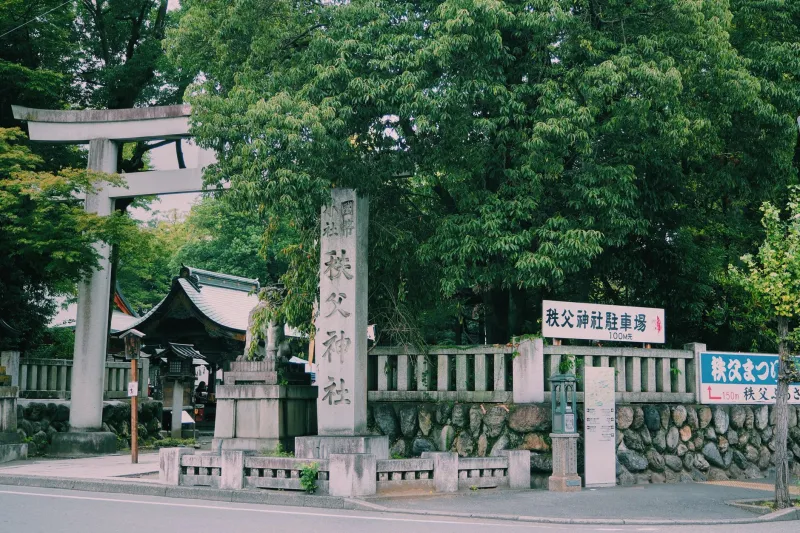
The practice of oharae, or great purification, occurs twice annually in the Shinto tradition — at the end of June and again at the close of December. Participants pass through a large ring woven from miscanthus grass, a form called chinowa kuguri, tracing a figure-eight path that is understood to remove accumulated spiritual impurity. What is being released is not merely the abstract concept of sin, but the specific residue of months lived: small failures, unresolved tensions, the subtle weight of time itself.
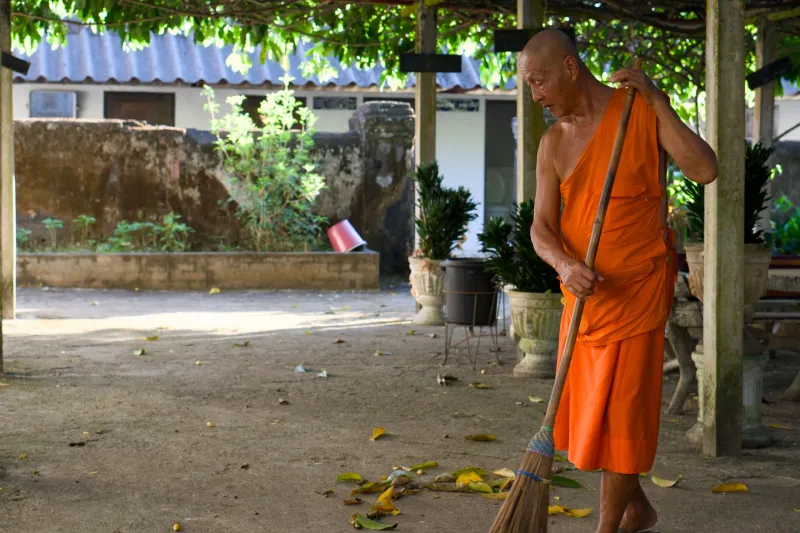
Buddhist temples observe their own seasonal markers. The O-Bon festival in midsummer calls communities to acknowledge the dead — and in doing so, to gently loosen the grip of grief that may have calcified over intervening months. Autumn ceremonies at many temples are oriented around mujo, the Buddhist teaching of impermanence, inviting practitioners to witness the falling of leaves not as loss but as the natural completion of a cycle. Even the sweeping of temple grounds — a daily act — takes on heightened symbolic meaning in autumn, when monks and volunteers gather fallen leaves with a care that borders on reverence.
Release as Practice, Not Event
What distinguishes the Japanese temple approach from the Western resolution tradition is this: release is understood as a practice, not an event. The difference is more than semantic. An event happens to you — or you make it happen — and then it is over. A practice is something you return to, something that develops texture and depth over time.
When a practitioner at a Japanese temple writes a wish or a worry onto a wooden ema tablet and hangs it at a shrine, they are not simply offloading a concern. They are entering into a relationship with the act of surrender. The tablet remains visible, weathering alongside the practitioner through subsequent seasons, until it is ceremonially burned — often at the new year, or at a designated purification rite — completing the arc of release in a way that is tangible, witnessed, and temporally grounded.
Similarly, the burning of gomagi — small wooden sticks inscribed with prayers or burdens — during goma fire rituals in esoteric Buddhist practice is an act that engages the body, the senses, and the passage of time simultaneously. The practitioner does not simply decide to release something. They watch it transform.
Four Seasonal Thresholds for the American Year
For those in the United States who wish to draw from this tradition with sincerity and care, the Japanese temple model suggests a reorientation away from the single annual reset and toward four meaningful thresholds — one at each seasonal turning.
Late Winter into Spring invites the release of what has been held through the dark months. This is the appropriate season to examine what was clutched tightly for warmth and protection, and to ask honestly whether it still serves. A simple practice: write on paper what you are prepared to release, then burn or bury it in the thawing ground.
Midsummer calls for an honest reckoning with grief. Following the spirit of O-Bon, this threshold is less about resolution than acknowledgment — sitting with what has been lost, honoring it, and then allowing it to move. A candle floated on water, a letter written and then released to flame, a quiet hour spent in a garden at dusk: these are sufficient forms.
Early Autumn is perhaps the richest threshold for Americans, who are already culturally attuned to September as a time of new beginnings through the school year's rhythm. The Japanese temple tradition deepens this intuition by pairing new beginning with conscious release — sweeping out what the summer accumulated before the interior season begins. Clearing a space in your home with deliberate attention, rather than mere tidiness, carries this spirit well.
Year's End completes the cycle. Rather than a celebration of arrival, it is an occasion for oharae-inspired purification — a review of the year not for the purpose of judgment but for honest accounting. What was carried that need not be carried further? The act of writing it down, speaking it aloud, or simply sitting with it in stillness before the new year arrives constitutes a genuine threshold crossing.
The Discipline of Returning
Perhaps the most countercultural aspect of this approach, for an American audience accustomed to the language of breakthrough and transformation, is its insistence on return. Japanese temple practice does not promise that releasing something once will free you of it permanently. Grief resurfaces. Old patterns reassert themselves. The point is not to eliminate but to maintain a living relationship with the ongoing work of release — to show up at the threshold again and again, season after season, with honesty rather than shame.
There is profound mercy in this framing. It removes the implicit failure embedded in every abandoned New Year's resolution and replaces it with something more durable: the understanding that the work of becoming is never finished, only deepened. Each season offers another doorway. Each doorway asks only that you arrive at it with presence.
At Koumarusan Hourinji, we believe this cyclical wisdom — rooted in centuries of Japanese temple practice — speaks directly to something the modern American spirit quietly hungers for: not a single dramatic reinvention, but a faithful, seasonal tending of the inner life. The ancient calendar, it turns out, was never merely about time. It was always about the art of living it well.