Into the Green Silence: How Japan's Forest Bathing Practice Is Quietly Healing America
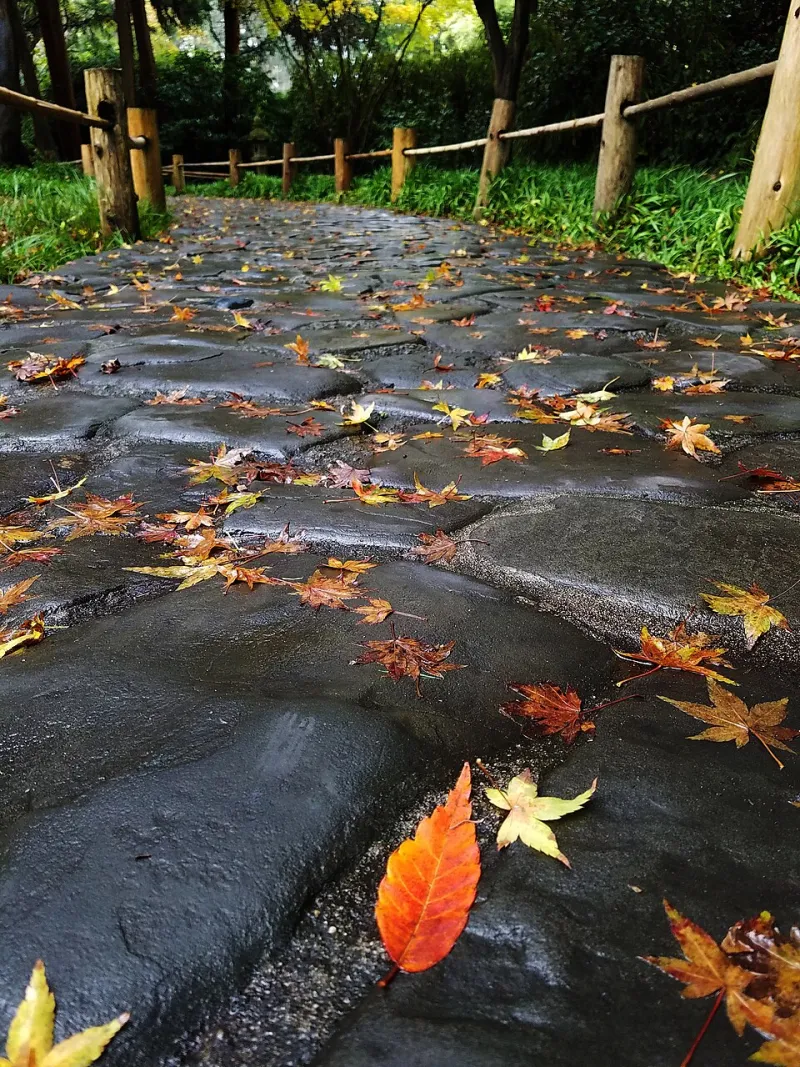
Photo: Lisafern, CC0, via Wikimedia Commons
In an age of perpetual notifications and fluorescent-lit productivity, a deceptively simple Japanese practice is gaining serious traction in American wellness circles — and the science behind it is harder to dismiss than you might expect. Shinrin-yoku, or forest bathing, asks nothing more of you than your unhurried presence beneath a canopy of trees. Yet what it returns, according to both ancient Japanese tradition and modern neuroscience, is something profound: a recalibration of the nervous system, a quieting of the anxious mind, and a renewed sense of connection to the living world.
This is not hiking. It is not birdwatching, trail running, or any other goal-oriented outdoor activity. Shinrin-yoku is, at its core, the deliberate practice of being in a forest rather than moving through one.
Roots in the Sacred Landscape
To understand shinrin-yoku fully, one must understand how the Japanese relationship to forested land differs from the American one. In Japan, forests have never been purely utilitarian spaces. The great cedar groves surrounding Shinto shrines and Buddhist temples — spaces like those adjacent to Koumarusan Hourinji — are considered spiritually charged environments, places where the boundary between the human and the divine becomes permeable. The Japanese concept of satoyama, the transitional landscape between village and mountain wilderness, reflects a cultural understanding that human wellbeing is inseparable from proximity to living nature.
Shinrin-yoku as a formal practice was codified by Japan's Forest Agency in 1982, partly as a public health initiative and partly as a conservation strategy — encouraging urban populations to visit and thereby value the nation's forests. But the instinct it formalized was far older, rooted in centuries of temple culture that understood the healing quality of a walk among ancient trees.
The term itself is evocative: shinrin means forest, and yoku carries the sense of a bath — an immersive, enveloping experience rather than a glancing one. You do not visit the forest; you enter it the way you enter water.
What the Science Actually Says
For American audiences accustomed to demanding evidence before embracing wellness claims, shinrin-yoku offers an unusually robust body of research. Japanese researchers, led by figures such as Dr. Qing Li of Nippon Medical School, have spent decades documenting the physiological effects of forest immersion with measurable precision.
Among the most compelling findings: time spent in forested environments significantly increases the activity of natural killer (NK) cells — a category of white blood cell central to immune function and cancer surveillance. In one widely cited study, a three-day forest bathing trip produced NK cell activity increases that persisted for more than thirty days afterward.
Additionally, researchers have documented that forests emit phytoncides — organic compounds released by trees, particularly conifers — that appear to drive many of these immune benefits when inhaled. The forest is not merely a pleasant backdrop; it is an active biochemical environment that human physiology responds to in measurable ways.
On the neurological side, studies using brain imaging have shown that time in natural environments reduces activity in the prefrontal cortex region associated with rumination — the repetitive, self-referential negative thinking that characterizes anxiety and depression. Dr. Gregory Bratman at the University of Washington has been among the American researchers extending this work, finding that even relatively short nature walks in urban-adjacent green spaces produce detectable shifts in mood and cognitive function.
For a nation in the grip of a documented mental health crisis — where anxiety disorders affect an estimated 40 million adults, according to the Anxiety and Depression Association of America — these findings carry genuine urgency.
Americans Who Found Their Way to the Trees
The people discovering shinrin-yoku in America come from diverse backgrounds, but their accounts share certain common threads.
Marcella, a 38-year-old software engineer from Portland, Oregon, began practicing forest bathing after her therapist suggested she try reducing screen time. "I thought I was just going for walks," she recalls. "But when I actually slowed down — when I stopped trying to get somewhere — something shifted. I started noticing things I'd walked past a hundred times. The smell of the Douglas fir after rain. The way light moves through a canopy. I'd come back feeling like I'd slept for twelve hours."
David, a 52-year-old high school teacher from suburban Atlanta, encountered the practice through a community wellness program at a local nature center. "I was skeptical. I'm a practical person. But the research was real, and I figured I had nothing to lose." He now practices twice monthly in Chattahoochee National Forest. "My blood pressure has come down. My doctor noticed before I told her what I was doing."
These individual accounts align with patterns emerging in American wellness communities from Seattle to Asheville, where certified forest therapy guides — trained through organizations such as the Association of Nature and Forest Therapy, based in California — are leading group sessions in public parks and nature preserves.
A Practical Guide to Beginning Your Own Practice
Shinrin-yoku requires no special equipment, no membership, and no prior experience. It does require intention and a willingness to resist the American cultural reflex toward productivity.
Find your forest. You do not need wilderness. Urban parks with substantial tree cover — Central Park in New York, Lincoln Park in Chicago, Griffith Park in Los Angeles, Rock Creek Park in Washington, D.C. — are legitimate starting points. National and state forests offer deeper immersion. The key is choosing a space where you can walk slowly without feeling conspicuous or rushed.
Leave the earbuds at home. Shinrin-yoku is fundamentally a sensory practice. Podcasts, music, and phone calls create a membrane between you and the environment. The practice asks you to hear the forest — wind in leaves, distant water, birdsong — not as background noise, but as primary experience.
Move slowly and without destination. Aim for a pace roughly half your normal walking speed. There is no distance goal, no calorie target. Turn when you feel drawn to turn. Pause frequently. Sit when you find a comfortable spot.
Engage all five senses deliberately. Touch the bark of a tree. Notice the quality of light filtering through the canopy. Breathe deeply and try to identify the specific scents of your environment. This sensory attentiveness is the core mechanism of the practice.
Allow a minimum of two hours. Research suggests that the most significant physiological effects emerge after approximately two hours of immersion. A twenty-minute walk has value, but it is not quite the same experience.
The Temple at the Heart of the Practice
At Koumarusan Hourinji, we observe that the most enduring wellness traditions are rarely inventions — they are recoveries. Shinrin-yoku did not create a new relationship between human beings and forests; it named and formalized one that had always existed, particularly in cultures that built their sacred spaces within the trees rather than apart from them.
The great temple forests of Japan were not incidental to spiritual practice; they were integral to it. The walk through the cedar grove before reaching the shrine was itself a form of preparation — a shedding of ordinary consciousness, a tuning of the senses toward the sacred. What contemporary neuroscience calls parasympathetic nervous system activation, those temple architects understood as the quieting necessary for genuine encounter.
Americans living with digital fatigue, chronic anxiety, and a gnawing sense of disconnection from the natural world may find that the forest offers something that no app, supplement, or productivity system can replicate. The trees have been waiting, with considerable patience, for us to remember how to listen.