Closed Gates, Open Hearts: The Spiritual Discipline of Japanese Temple Inaccessibility
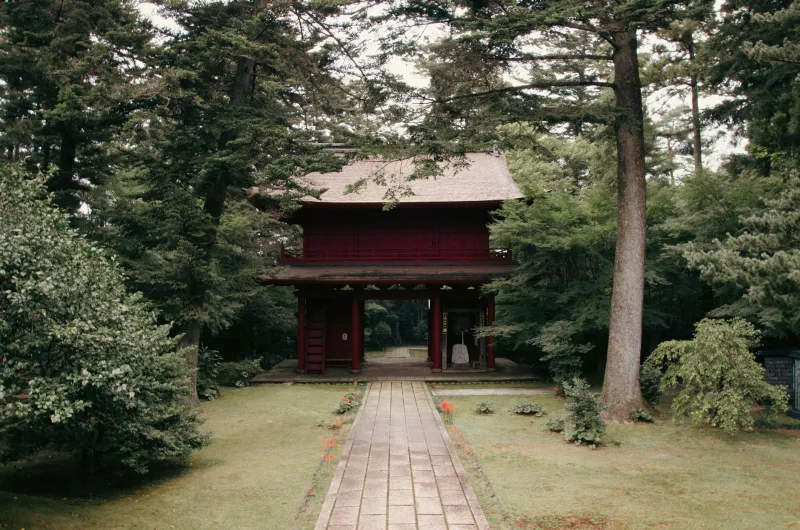
There is a particular kind of sign that appears at certain Japanese temples—small, unadorned, almost apologetic in its simplicity. It reads, in effect: This place is not for you today. No elaborate explanation follows. No suggestion of an alternative. The gate is simply closed, and the world beyond it belongs, for the moment, to silence alone.
For the American visitor accustomed to the logic of perpetual access—where every museum has extended hours, every spiritual teacher maintains a social media presence, and every experience can be purchased or streamed on demand—this encounter can feel disorienting. It may even feel like a small insult. Yet within that closed gate lies one of the most quietly radical teachings that Japanese temple culture has to offer: the idea that inaccessibility, practiced with intention, is not a failure of hospitality but an expression of it.
The Architecture of Sacred Limits
Across Japan, temples observe a range of access restrictions that have no direct parallel in Western religious institutions. Some inner sanctuaries, known as hibutsu (literally, "secret Buddhas"), are unveiled to the public only once every several decades—or, in certain cases, never. The image housed within is considered too sacred for ordinary viewing, its power preserved precisely through concealment. Other temples observe seasonal closures, withdrawing from the tourist circuit during winter months not out of logistical necessity but as a form of spiritual rest. Still others maintain restricted precincts where even ordained practitioners may not enter without specific permission.
These are not bureaucratic inconveniences. They are, rather, architectural expressions of a coherent spiritual philosophy: that the sacred requires protection, that depth demands enclosure, and that not everything of value should be made immediately available to everyone at all times.
At Koumarusan Hourinji, the rhythms of the temple calendar reflect this understanding. The year is not a flat, undifferentiated expanse of equal days. Certain periods call for intensified practice and inward turning. Others invite the public into shared observance. The movement between openness and closure is itself a kind of teaching—a living demonstration that wholeness requires both.
Unavailability as a Spiritual Act
Western culture has, for several generations now, treated availability as a moral virtue. To be reachable is to be responsible. To respond quickly is to demonstrate care. To say no—to an invitation, an opportunity, a request for one's time—is to risk being perceived as selfish, difficult, or insufficiently committed.
The Japanese temple tradition gently but firmly disagrees.
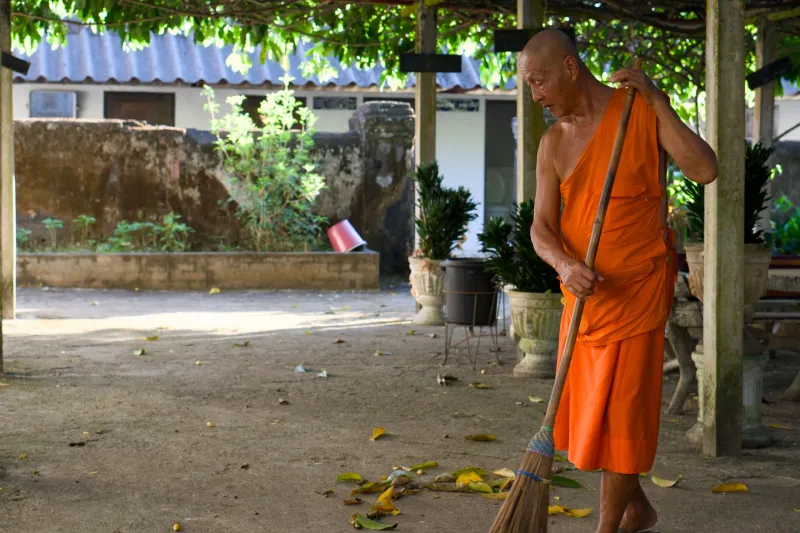
In the monastic framework that shaped so many of Japan's great temple complexes, the monk's withdrawal from ordinary social availability was understood not as neglect of the world but as service to it. The hours spent in silent meditation, unreachable by anyone outside the monastery walls, were considered among the most productive hours of the day—not in any measurable economic sense, but in the deeper sense of spiritual cultivation that would eventually overflow into the monk's interactions with others.
The logic runs something like this: a vessel that is never allowed to fill cannot pour. A person who is perpetually available to everyone around them gradually becomes unavailable to themselves. And a self that has lost contact with its own depths has very little of substance to offer those who depend upon it.
This is not a justification for isolation or avoidance. It is, rather, a recalibration of what genuine generosity requires.
The Hibutsu Principle in Contemporary Life
Consider the concept of the hibutsu not as a religious artifact but as a personal practice. What, in your own life, is being depleted by constant exposure? What capacities—creative, emotional, spiritual—are diminished when they are perpetually on display or perpetually on call?
For many Americans, the most honest answer involves digital availability. The smartphone has made it possible to be reached by anyone, at any moment, under virtually any circumstance. This is frequently described as a convenience, and in narrow practical terms it is. But the spiritual cost is rarely calculated alongside the practical benefit. To be always reachable is to surrender the inner sanctum—the quiet, protected space where one's deepest responses to life actually form.
A digital detox, understood through the lens of temple practice, is not a retreat from responsibility. It is the creation of a hibutsu—a protected interior space whose value is inseparable from its inaccessibility. The quality of thought, prayer, or creative work that emerges from such a space is different in kind from what can be produced in a state of constant interruption. It carries, one might say, a different resonance.
Saying No as Sacred Practice
Beyond digital boundaries, the temple principle of intentional closure applies to the broader question of how one allocates time and energy. American professional culture in particular tends to treat the acceptance of every opportunity as evidence of ambition and the refusal of any invitation as evidence of limitation. The result is a chronic overextension that masquerades as productivity while quietly exhausting the very capacities it claims to develop.
Japanese temple culture offers a different model. The abbot who declines to receive visitors during a period of intensive practice is not being uncharitable. The monastery that closes its gates for a season of communal retreat is not abandoning its mission. Both are, rather, honoring the understanding that depth requires protection—that what one refuses to do is often as spiritually significant as what one chooses to do.
Applying this principle in practical terms might look like declining a speaking invitation to protect a period of writing. It might mean establishing evenings or weekend mornings that are genuinely unavailable to professional demands. It might mean saying, with clarity and without excessive apology, that a particular request falls outside the boundaries of what one is able to offer at this time.
None of this is scarcity thinking. It is, rather, the recognition that genuine abundance flows from depth rather than breadth—that the quality of one's presence in the spaces one does inhabit is directly related to the integrity of the limits one maintains around them.
What the Closed Gate Promises
There is something worth sitting with in the image of the closed temple gate. It does not promise that the space beyond it is empty. It promises, in fact, the opposite: that something is happening there that requires protection. The closure is evidence of life, not absence.
This is the reorientation that the Japanese temple tradition invites. When you close a door—to a request, a notification, an obligation that exceeds your actual capacity—you are not diminishing yourself or withdrawing from the world. You are, rather, declaring that something worth protecting is taking place within. You are saying, in the quiet language of limits, that the interior life is real, that it requires tending, and that its flourishing is not incidental to your relationships and responsibilities but foundational to them.
The gate will open again. The season of closure will pass, and what has been cultivated in the quiet will find its way outward. But first, the door must be allowed to close. That, the temples have always known, is where the real work begins.