The Grammar of Quiet: Redesigning Your Sonic World Through the Japanese Wisdom of Ma
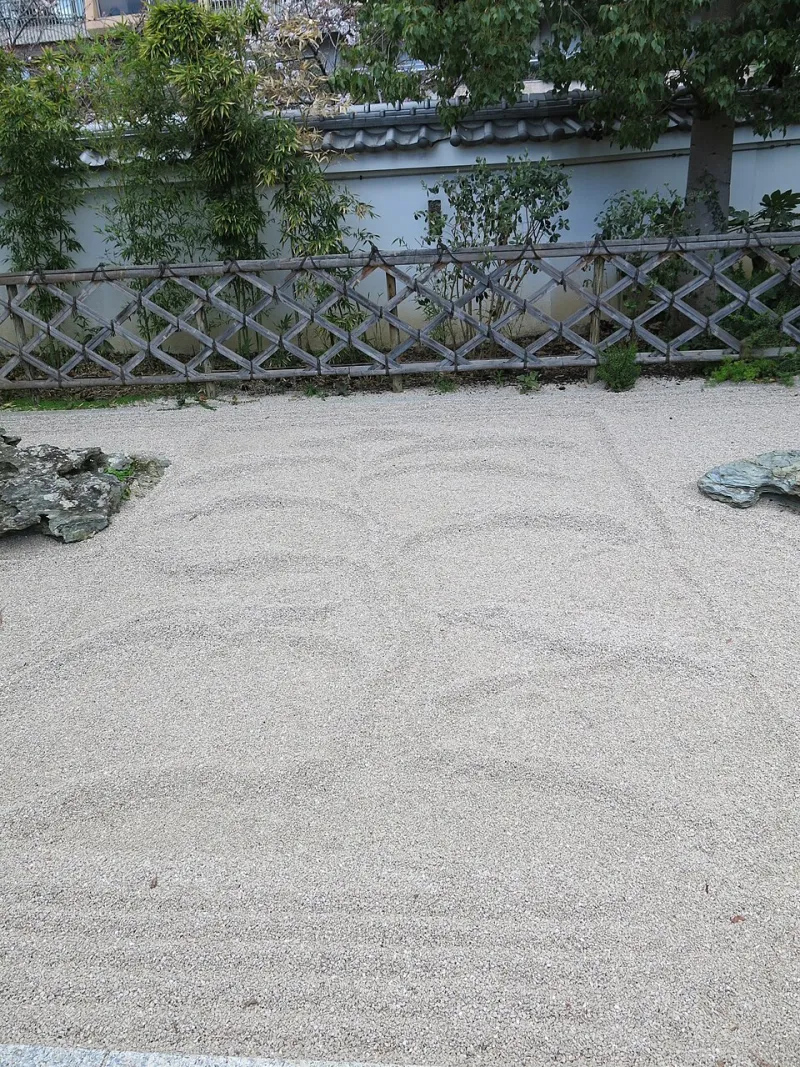
Photo: Tangopaso, Public domain, via Wikimedia Commons
There is a moment in a traditional shakuhachi performance when the musician stops playing. The bamboo flute goes silent, yet the room does not become empty. Something lingers—a kind of presence that the notes themselves could never fully deliver. In Japanese aesthetic thought, this interval has a name: ma. It is the purposeful space between sounds, and for centuries, Japanese architects, musicians, and temple garden designers have treated it not as an absence but as a living element, as carefully crafted as any note or stone.
For most Americans, silence is something that happens to us—an accident between podcasts, a brief gap before the next notification. We have not been taught to design it, to cultivate it, or even to recognize it as something worth protecting. The result is a sonic environment that accumulates rather than breathes, and a nervous system that never quite learns how to rest.
What Ma Actually Means—and Why Translation Falls Short
The word ma (間) is often rendered in English as "negative space" or "pause," but neither phrase captures its full weight. In Japanese, the character itself contains the image of moonlight passing through a gate—light made meaningful by the frame that surrounds it. Applied to sound, ma is the recognition that what we do not hear shapes what we do hear, that silence is not neutral but generative.
This principle runs through virtually every classical Japanese art form. In noh theater, actors hold stillness for extended periods, and audiences are trained to receive those pauses as emotionally dense rather than dramatically empty. In ikebana flower arrangement, the open air around each stem is considered as deliberate as the stem itself. And in the design of traditional temple gardens—places like the moss gardens of Kyoto or the raked gravel courts of Zen monasteries—sound is architected with the same precision as stone and water.
To visit such a garden is to understand that the Japanese have long regarded acoustic experience as a form of spiritual practice, not background ambiance.
The Shakuhachi and the Architecture of Breath
No instrument embodies ma more fully than the shakuhachi, the end-blown bamboo flute that has been central to Japanese contemplative music for over a millennium. Originally used by Zen Buddhist monks of the Fuke sect as a form of moving meditation called suizen—literally, "blowing Zen"—the shakuhachi produces tones that feel less like musical notes and more like breath given form.
What distinguishes shakuhachi music from Western flute traditions is its embrace of imperfection and interval. The instrument's breathy, slightly rough timbre is not a flaw to be corrected but a feature to be honored. And the silences between phrases are not rests in a Western musical sense; they are moments in which the listener is invited to continue the music internally, to become a participant rather than a passive audience.
Research emerging from psychoacoustics has begun to validate what Japanese monks understood intuitively. Studies conducted at institutions including the University of California have found that natural, irregular sounds—wind through bamboo, water moving over stone—activate the parasympathetic nervous system more effectively than engineered white noise. The shakuhachi, with its organic irregularities and deliberate silences, appears to function acoustically in ways that parallel these natural soundscapes.
Water as Instrument: The Temple Garden's Sonic Vocabulary
In the garden designs surrounding many Japanese temples, water is never incidental. The placement of a stone basin (tsukubai), the angle at which a bamboo pipe releases water, the depth of a pool—all of these decisions are made with acoustic intention. The sound of water dripping onto moss produces a different frequency than water striking stone, and Japanese garden designers have historically chosen these elements the way a composer chooses instrumentation.
The shishi-odoshi, a rocking bamboo device that periodically strikes a stone with a hollow knock, is perhaps the most recognizable example of deliberate sonic design in the Japanese garden. Its irregular rhythm—never quite predictable, never quite the same—prevents the mind from habituating to it and tuning it out. It keeps the listener gently present, returning attention to the immediate moment without demanding focus.
This is, in essence, the acoustic logic of ma made physical: a sound that teaches you to listen by occasionally falling silent.
Translating Ancient Principles to the American Home
For those of us navigating the sonic landscape of contemporary American life—the open-plan offices, the always-on streaming services, the ambient roar of urban traffic—the philosophy of ma offers something genuinely useful: a framework for making deliberate choices about sound rather than simply enduring whatever arrives.
Begin not by adding sound but by auditing it. Spend one morning moving through your home or workspace and noting every sound source that is operating without your conscious intention. The refrigerator hum, the television left on as company, the playlist chosen out of habit rather than need. Many Americans discover that their sonic environment has been assembled entirely by default.
From there, consider introducing a single element of intentional natural sound—a small tabletop water feature, a wind chime placed where prevailing breezes will produce irregular rather than constant sound, or a simple practice of sitting in deliberate quiet for ten minutes before engaging with screens in the morning. These are not decorative choices; they are architectural ones, reshaping the acoustic space in which your mind spends its hours.
Finally, explore shakuhachi recordings as a listening practice rather than background music. Set aside fifteen minutes, remove other distractions, and allow the silences within the music to register as fully as the notes. Notice what happens in those intervals. This is ma as practice—and for many Westerners, it becomes a doorway into a quality of attention they have not experienced since childhood.
Learning to Hear What Was Always There
The Japanese aesthetic tradition does not ask us to achieve silence. It asks us to become literate in it—to recognize that every sound carries meaning partly because of what surrounds it, and that we have more agency over our sonic lives than the relentless noise of modern culture would suggest.
At Koumarusan Hourinji, we believe that ancient wisdom does not require a plane ticket to Japan to become relevant. The principles that shaped the acoustic design of centuries-old temple gardens are available to anyone willing to slow down long enough to listen—not just to sound, but to the eloquent grammar of what comes between.