Festival of the Spirit: How Japanese Matsuri Traditions Are Taking Root in American Cities
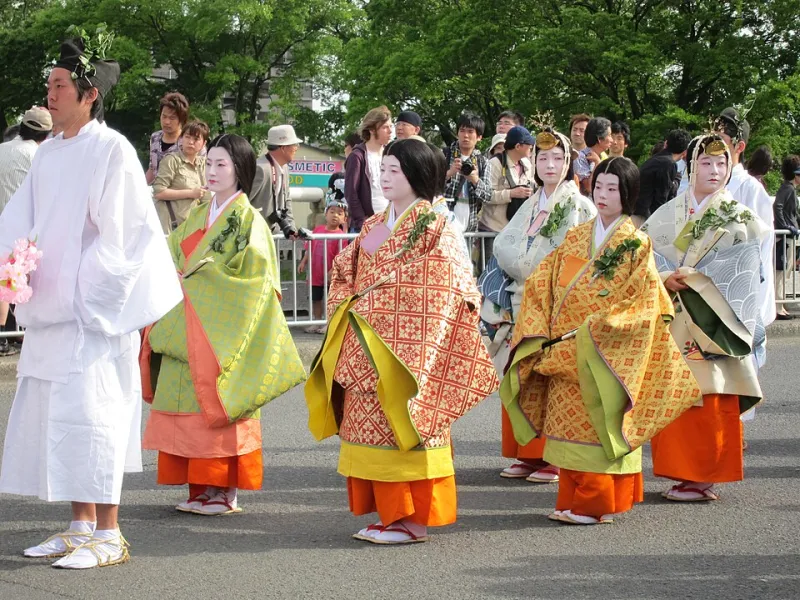
Photo: Nullumayulife, CC BY 2.0, via Wikimedia Commons
On a warm August evening in Little Tokyo, Los Angeles, the air changes. The smell of yakitori drifts past strings of paper lanterns. Taiko drums send a pulse through the pavement that you feel before you consciously hear it. Thousands of people — Japanese-American families who have attended for generations, curious newcomers from surrounding neighborhoods, tourists who stumbled upon something they did not expect — move together through streets that have, for this moment, become something other than ordinary.
This is matsuri. And it is happening, with increasing frequency and depth, across the United States.
What Matsuri Actually Means
The word matsuri is often translated simply as "festival," but this translation flattens something essential. In Japanese, the term carries a meaning closer to "worship" or "to honor" — derived from the verb matsuru, which refers to the act of venerating deities and ancestors. Matsuri are not primarily entertainment events with cultural decoration added. They are, at their origin, acts of spiritual engagement: occasions on which communities gather to express gratitude to kami (divine spirits), to mark the turning of seasons, to pray for protection, and to reinforce the bonds that hold a community together across time.
Each matsuri is typically associated with a specific shrine and a specific purpose — a harvest prayer, a purification rite, a memorial for the departed. The rituals that unfold within them, from the procession of the mikoshi (a portable shrine carried through the streets to allow the kami to bless the surrounding area) to the ceremonial dances of bon odori, are not performances. They are, in the original sense, liturgy.
Understanding this transforms the experience of attending, even for those who do not share the tradition.
A Living Tradition in New Soil
Japanese matsuri first arrived in the United States with the earliest waves of Japanese immigration in the late 19th and early 20th centuries. Communities in California, Hawaii, and the Pacific Northwest established festivals as a way of maintaining cultural continuity and spiritual practice in an unfamiliar land. Many of these early celebrations faced severe disruption during the internment of Japanese Americans during World War II — a rupture whose effects on community memory and cultural transmission are still being reckoned with today.
The revival and growth of matsuri across America in recent decades represents something significant: not simply the preservation of heritage, but its active renewal. Organizations like the Japanese American Cultural and Community Center in Los Angeles, the Japan-America Society chapters operating in cities from Atlanta to Denver, and dozens of local Buddhist temples and Shinto-affiliated organizations have invested deeply in restoring and expanding these celebrations.
What has surprised many organizers is who shows up.
Festivals Across the Country: A Selective Guide
Nisei Week Japanese Festival — Los Angeles, California One of the oldest and largest Japanese American festivals in the country, Nisei Week has been held in Little Tokyo since 1934, with only wartime interruptions. The celebration spans ten days in August and includes a grand parade, traditional arts demonstrations, and a coronation ceremony. The spiritual dimensions are present throughout: Buddhist temple ceremonies, taiko performances with their roots in sacred ritual, and the communal gathering that matsuri has always been designed to facilitate.
Obon Festival — Multiple Locations Nationwide Obon is among the most spiritually significant of all Japanese observances — a Buddhist tradition honoring the spirits of ancestors, typically held in mid-August. Across the United States, Buddhist temples in cities including San Jose, Seattle, Denver, and Honolulu host Obon festivals that include bon odori circle dances performed to guide ancestral spirits home. For American attendees unfamiliar with the tradition, these events offer a genuinely moving encounter with a different relationship to mortality and memory.
Japan Festival — Boston, Massachusetts Held annually on the grounds of the Boston Common, this festival brings traditional matsuri elements — mikoshi processions, taiko drumming, tea ceremony demonstrations, and traditional craft exhibitions — to the heart of New England. It draws tens of thousands of attendees and has become a notable example of how matsuri can create genuine cross-cultural engagement rather than mere tourism.
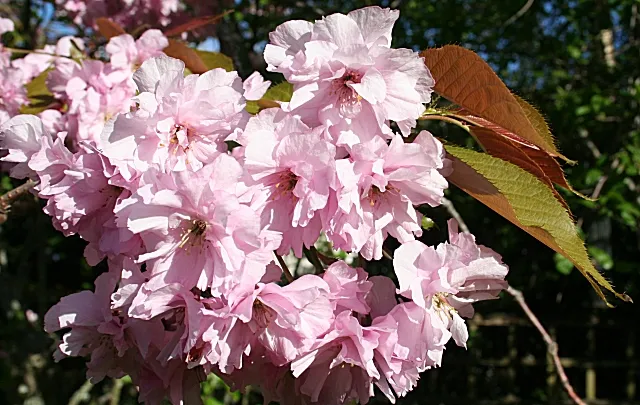
Sakura Matsuri — Brooklyn, New York Centered on the Japanese Hill-and-Pond Garden at the Brooklyn Botanic Garden, this spring festival celebrates the cherry blossom season with deep attention to its aesthetic and spiritual resonance. The Japanese reverence for sakura is inseparable from the Buddhist awareness of impermanence — the blossoms are beautiful precisely because they do not last — and the festival consistently draws visitors who leave with something more than photographs.
Attending with Respect and Awareness
For American visitors approaching matsuri for the first time, a degree of intentional preparation transforms the experience considerably. Several principles are worth holding in mind.
Recognize that you are entering a space with spiritual dimensions. Even when a matsuri feels festive and accessible, its underlying structure is devotional. Approach mikoshi processions, shrine areas, and ceremonial performances with the same quiet attentiveness you would bring to any sacred space.
Learn the specific occasion before you arrive. Knowing whether you are attending a harvest thanksgiving, an ancestral memorial, or a purification festival changes how you receive what unfolds around you.
Participate where invited, observe where appropriate. Many matsuri welcome visitors to join bon odori dances, try traditional foods, or watch demonstrations. Others include ceremonies that are specifically for community members. Follow the lead of organizers and community participants.
Support the community organizations behind the festival. Matsuri in America are sustained by extraordinary volunteer labor and community investment. Purchasing from vendors, making donations where offered, and engaging genuinely with the people who have built these celebrations is itself a form of respect.
Why This Matters Now
American civic life has, by many measures, grown more fragmented in recent years. The shared rituals that once anchored communities — seasonal celebrations, neighborhood gathering traditions, collective acts of gratitude and remembrance — have in many places grown thin. The hunger for genuine communal experience is real and widely felt.
Matsuri, in their American iterations, offer something that goes beyond cultural exchange. They model a way of organizing community life around reverence, seasonal awareness, and the deliberate honoring of what has come before. They remind participants, whatever their background, that celebration and spiritual practice need not be separate categories.
At Koumarusan Hourinji, we understand these festivals as living expressions of the ancient wisdom this site is dedicated to exploring — traditions that do not merely survive in America, but find, in this new soil, new and unexpected ways to flourish.