When Enough Is Everything: Embracing Mono no Aware in an Age of Relentless Ambition
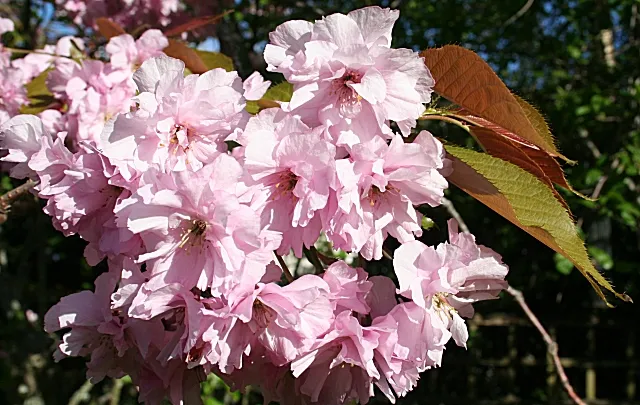
Photo: Anne Burgess, CC BY-SA 2.0, via Wikimedia Commons
There is a particular kind of exhaustion that settles into the bones of modern American life. It arrives not from overwork alone, but from the persistent, low-grade anxiety of never having arrived — never being optimized enough, productive enough, youthful enough, successful enough. The cultural machinery of hustle runs quietly beneath nearly every life decision, from career pivots to skincare routines to retirement portfolios. More is the operating system. Permanence is the goal.
And yet, somewhere in the 11th-century writings of Japanese court lady Murasaki Shikibu, who authored The Tale of Genji, there exists a single phrase that dismantles this entire architecture with elegant precision: mono no aware.
Pronounced moh-no no ah-wah-reh, the term is most commonly translated as "the pathos of things" — a recognition that beauty and sorrow are not opposites, but companions. It is the feeling that moves through you when cherry blossoms fall, when a child's laughter fades around a corner, when the last light of summer slants through a window at exactly the right angle and then disappears. Mono no aware does not mourn transience. It honors it.
The Philosophy Beneath the Petals
To understand mono no aware fully, one must first understand that it is not a coping mechanism or a therapeutic technique. It is a deeply embedded aesthetic and philosophical orientation, one that has shaped Japanese poetry, visual art, garden design, and ritual practice for over a millennium. The literary critic Motoori Norinaga, writing in the 18th century, articulated it as the capacity to be moved by the world — to feel its texture, its brevity, and its quiet significance.
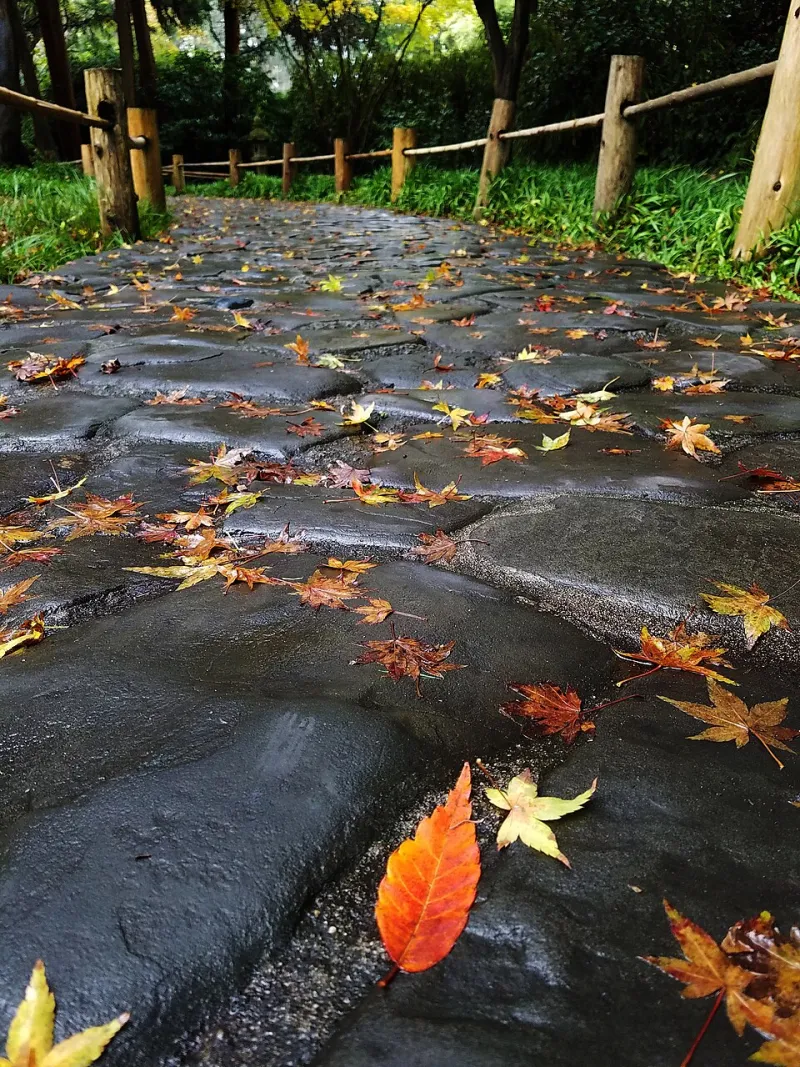
In Japan, this sensibility is inseparable from the natural world. The annual hanami (flower-viewing) tradition, in which families and friends gather beneath blooming cherry trees, is not simply a celebration of spring. It is a communal acknowledgment that the blossoms will fall within days, and that this falling is precisely what makes them magnificent. The Japanese garden, too, is designed not for visual perfection but for the experience of seasonal change — moss darkened by rain, stone worn by decades, leaves turning without apology.
At Koumarusan Hourinji, where ancient practice meets contemporary seeking, we find that this aesthetic resonates powerfully with the many Americans who arrive at spiritual doorways not through devotion, but through depletion.
What Hustle Culture Costs Us
The American relationship with time is, in many respects, adversarial. Time is managed, optimized, blocked, and protected. Aging is treated as a problem to be solved rather than a passage to be honored. Relationships are evaluated through a lens of utility. Even leisure — that last refuge of the unscheduled — has been colonized by productivity rhetoric: rest to perform better, meditate to focus harder, vacation to return more creative.
This framework is not without its achievements. American ambition has built remarkable things. But it has also produced a society in which anxiety disorders affect more than 40 million adults, in which loneliness has been declared a public health epidemic, and in which a significant portion of the population reports feeling that their lives lack meaning despite material comfort.
Psychologists who study what is sometimes called "arrival fallacy" — the mistaken belief that achieving a goal will deliver lasting happiness — have found that the relentless pursuit of future states consistently erodes present-moment satisfaction. The mind trained to optimize is also the mind least capable of experiencing wonder.
Mono no aware offers a different architecture entirely.
Practicing the Impermanent
Adopting this philosophy in a Western context does not require renouncing ambition or retreating into passivity. It requires, instead, a fundamental reorientation of attention. Several practical entry points are worth considering.
Seasonal attentiveness. Rather than fighting the rhythms of the natural year — mourning the end of summer, dreading the onset of winter — practitioners of mono no aware cultivate a conscious engagement with each season's particular character. This might mean walking the same trail across all four seasons, or keeping a simple journal that notes small natural changes: the first frost on a windowpane, the specific quality of October light on a city street.
Honoring endings. In American culture, endings are frequently treated as failures. Projects are abandoned rather than completed with ceremony; relationships dissolve without acknowledgment; careers end with awkward retirement parties that minimize rather than honor the closing of a significant chapter. Mono no aware invites a different approach — the deliberate, even grateful marking of conclusions as meaningful in themselves.
Releasing the optimized self. This may be the most challenging application for Western practitioners. The philosophy gently insists that you are not a project to be perfected. Your current form — your present age, your current limitations, your unresolved contradictions — carries its own specific beauty, one that will not be available in exactly this way at any future moment. This is not complacency. It is a form of radical presence.
Reframing relationships. Every significant relationship contains the seed of its ending — in time, in distance, in death. Mono no aware does not ignore this truth; it places it at the center of intimacy. When we hold the impermanence of our connections consciously, we are far more likely to be fully present within them, to speak the words that need speaking, to offer the attention that might otherwise be deferred.
The Grief That Opens Rather Than Closes
Perhaps the most counterintuitive aspect of mono no aware is that it does not lead away from grief but through it. The aesthetic does not ask us to transcend sorrow — it asks us to recognize that sorrow and beauty are woven from the same thread. The Japanese concept of aware itself carries this duality: it is simultaneously an expression of wonder and an expression of tenderness for what cannot last.
For many Americans accustomed to a cultural mandate toward positivity — the insistence that one must "move forward," "stay positive," and "not dwell" — this may feel disorienting at first. The permission to grieve, to feel the weight of passing time, to stand at the edge of something ending and simply witness it, is not a permission our culture readily grants.
And yet, those who have sat with this philosophy — whether through formal study, through extended time in Japan, or through the quiet doorways of temple practice — frequently describe the same experience: something loosens. The vigilance required to maintain an optimized self relaxes. What remains is not defeat, but a peculiar, sustaining clarity.
An Ancient Remedy for a Modern Ache
At its core, mono no aware is not a rejection of the American character. It is a complement to it — a philosophical practice that restores what relentless forward motion tends to erode: the capacity for wonder, for grief, for genuine presence, and for the specific joy that comes only from knowing that this moment, exactly as it is, will not come again.
The cherry blossoms fall. The seasons turn without our permission. The faces we love change slowly, then quickly, then are gone. Mono no aware does not ask us to be unmoved by this. It asks us to be moved fully — and to understand that in that fullness, something ancient and irreplaceable is preserved.
In the rush of American life, that may be the most radical practice of all.