Sacred Paper, Living Protection: A Thoughtful American's Guide to Ofuda Talismans
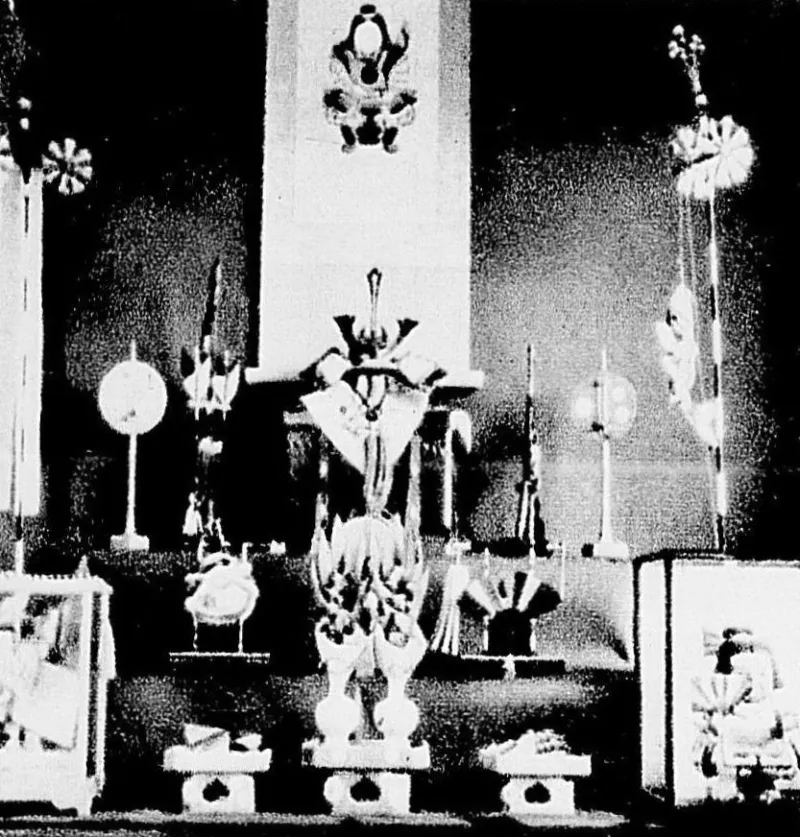
Photo: Unknown authorUnknown author, Public domain, via Wikimedia Commons
In the entryways and household altars of millions of Japanese homes, a small rectangular object occupies a place of quiet significance. Made of paper, wood, or thin cloth, it bears the name of a deity, a shrine, or a temple rendered in careful calligraphy or formal printing. It may be plain to the untrained eye — modest, even austere. Yet within the framework of Japanese spiritual life, this object is understood to carry the living presence of the divine into the domestic sphere.
This is the ofuda.
For Americans exploring Japanese spiritual traditions — whether through personal devotion, cultural curiosity, or a growing dissatisfaction with the impersonal nature of contemporary wellness culture — ofuda represent one of the most direct and historically grounded practices available. They are not decorative objects. They are not souvenirs. And they are not, as is sometimes assumed by Western observers, mere superstition. They are, within their own tradition, instruments of genuine sacred relationship.
Understanding them properly requires both intellectual honesty and cultural humility.
What Ofuda Actually Are
The word ofuda (御札) combines an honorific prefix with the character for "plate" or "tablet," though the objects themselves have evolved considerably over the centuries. In contemporary Japanese practice, ofuda are most commonly issued by Shinto shrines (jinja) or Buddhist temples (tera), where they are ritually consecrated — a process that, within the Shinto framework, is understood to invite the kami (divine spirit) of the associated deity to take up temporary residence within the object itself.
This is a critical distinction. Unlike a decorative religious print or a symbolic keepsake, an ofuda is considered, by those who receive and enshrine it, to be genuinely inhabited by sacred presence. The talisman is therefore not merely a reminder of the divine — it is, in a meaningful sense, a local expression of it.
Ofuda vary considerably in their purpose and origin. Some are issued by major national shrines, such as the Grand Shrine of Ise (Ise Jingu), which is dedicated to Amaterasu, the solar deity and divine ancestor of the imperial line. Others come from local shrines devoted to specific kami associated with agriculture, commerce, safe travel, household protection, or childbirth. The diversity of ofuda in circulation reflects the extraordinary breadth of the Shinto pantheon and the deeply localized nature of Japanese religious life.
Buddhist temples issue their own forms of ofuda as well, often bearing the names or seed syllables (bija) of bodhisattvas such as Kannon (Avalokiteshvara), Fudo Myo-o, or Jizo. While the theological framework differs from Shinto, the practical function — protective presence within the home — remains essentially the same.
The Kamidana: A Home for the Sacred
In traditional Japanese households, ofuda are not simply placed on a shelf or taped to a wall. They are enshrined within a kamidana — literally, a "god-shelf" — a miniature altar typically mounted high on a wall, ideally facing south or east, in a clean and central area of the home.
The kamidana serves as the domestic counterpart to the public shrine. It is a dedicated space in which the household maintains its ongoing relationship with the kami, offering water, salt, rice, and sakaki (a sacred evergreen) on a regular basis. The ofuda sits at the center of this arrangement, flanked by these offerings and, in many homes, by small lanterns or a shimenawa (a sacred rope of twisted rice straw).
For Americans establishing this practice, the kamidana need not replicate a Japanese aesthetic precisely. What matters is the principle: a designated, elevated, clean space that communicates, through its arrangement and maintenance, that this is a place of sacred attention. The specific materials and visual language may adapt to a household's existing environment, provided the underlying intention — honoring the sacred presence of the ofuda — remains intact.
Sourcing Ofuda With Integrity
This is the point at which cultural sensitivity becomes most practically important. Ofuda are not commodities. They are not mass-produced spiritual accessories available through general retail channels in the way that, say, decorative Buddha statues often are. An ofuda that has not been properly consecrated by a shrine or temple is simply a piece of paper with text on it — spiritually inert within the framework of the tradition.
For Americans seeking authentic ofuda, several options exist. Major Japanese shrines and temples with international reach — including Meiji Jingu in Tokyo, Fushimi Inari Taisha in Kyoto, and others — have, in recent years, made some forms of ofuda available through official overseas channels or to visitors who make the journey in person. Some Japanese-American communities in cities such as Los Angeles, San Francisco, Seattle, and Honolulu maintain active Shinto shrines — including Tsubaki America Shrine in Stockton, California, and Hawaii's network of established jinja — where ofuda can be received properly.
Purchasing ofuda from unlicensed online vendors, regardless of how authentic they appear, is generally discouraged by practitioners and scholars of Japanese religion alike. The consecration ritual — not the physical object — is what gives the ofuda its spiritual character.
Placement, Care, and Annual Renewal
Traditional guidance on ofuda placement is relatively specific. The talisman should be positioned at or above eye level, never on the floor or in a bathroom or kitchen area where impurity (kegare) might accumulate. It should face outward — toward the room rather than the wall — and should not be placed in a location where it would be looked down upon by those passing above (for example, directly beneath a second-floor room where people walk).
One of the most important — and frequently overlooked — aspects of ofuda practice is the annual renewal cycle. In traditional Japanese households, ofuda are returned to their originating shrine or temple at the end of each year, typically in late December or early January, as part of the o-mamori return ritual. The shrine then performs a goma or o焚き上げ (ritual burning) to release the sacred presence and return it to the kami. New ofuda are then received for the coming year.
This cycle is not incidental. It reflects a core principle of Japanese spirituality: that sacred relationships require active maintenance, and that the renewal of devotional objects is itself a form of spiritual practice.
For American practitioners without easy access to a Japanese shrine, some communities have developed adapted protocols — including mailing returned ofuda to appropriate institutions — and practitioners are encouraged to research local options or consult with established Japanese-American religious organizations.
Respectful Engagement vs. Appropriation
The question of cultural appropriation is one that any thoughtful American exploring Japanese religious practice must engage honestly. The distinction between respectful engagement and appropriation is not always obvious, but several guiding principles are worth holding.
Respectful engagement is characterized by genuine learning, acknowledgment of the tradition's origins, and a willingness to follow the practice as it actually exists rather than as one might prefer it to be. It involves sourcing objects through legitimate channels, maintaining them according to their own logic rather than repurposing them for aesthetic ends, and remaining open to guidance from practitioners within the tradition.
Appropriation, by contrast, tends to extract objects or symbols from their context for personal aesthetic or commercial use, without regard for their original meaning or the communities that sustain them.
Ofuda, properly received and properly maintained, fall clearly within the domain of respectful engagement — particularly when Americans approach them through established channels such as recognized shrines, formal study, or direct relationship with Japanese or Japanese-American practitioners.
A Living Practice for Modern Homes
What makes ofuda particularly compelling for contemporary Western practitioners is their fundamentally domestic character. Unlike many forms of religious engagement that require institutional participation, the ofuda practice is centered in the home — in the ordinary spaces of daily life. The kamidana is not a retreat from the world; it is a consecrated point within it.
For Americans navigating the fragmentary spiritual landscape of modern life, this quality carries real appeal. The ofuda does not demand a particular theological commitment or a wholesale conversion of worldview. It asks, instead, for a quality of attention — a willingness to designate one small space in the household as sacred, to tend it with some regularity, and to allow the presence it represents to remain a quiet, consistent feature of daily experience.
In this sense, the ofuda is less a relic of ancient Japan than a living invitation — one that has been extended, across centuries of practice, to anyone willing to receive it with care.