The Sacred No: What Japanese Temple Gatekeeping Reveals About Protecting Your Inner Life
There is a particular kind of exhaustion that many Americans recognize intimately: the fatigue of a life with no perimeter. Notifications arrive at midnight. Colleagues expect replies on weekends. Family members assume access. Friends call unannounced. In a culture that prizes availability as a form of generosity, the act of saying no has come to feel almost morally suspect—as though withholding oneself is a small act of cruelty rather than an act of care.
Japanese temple tradition holds an entirely different view.
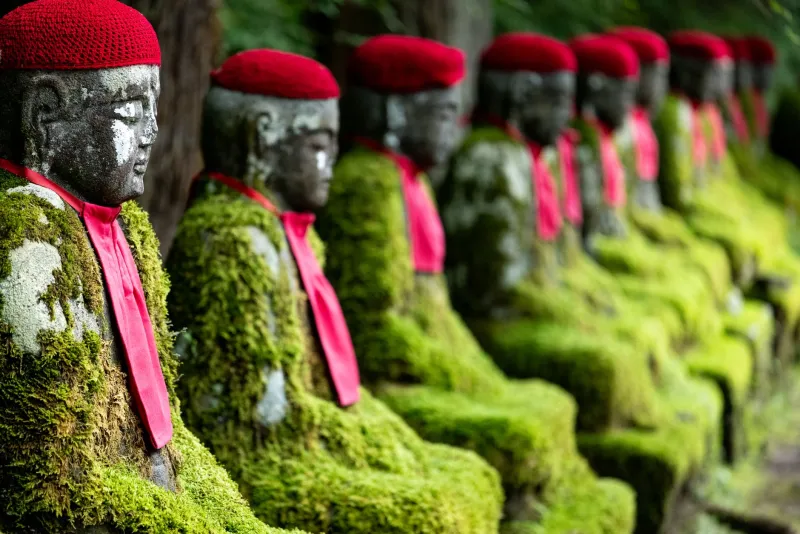
For centuries, the architecture, ritual, and philosophy of sacred Japanese spaces have been organized around the premise that what lies within is precious precisely because it is not universally accessible. The gate is not merely a passageway. It is a declaration. And the practices surrounding it offer Americans something quietly revolutionary: a framework in which refusal is understood as reverence.
The Gate as Spiritual Argument
To approach a traditional Japanese temple complex is to encounter a series of deliberate thresholds. The sanmon—the mountain gate—marks the first formal transition from the profane world into sacred ground. Its very name, derived from the characters for 'three liberations,' signals that passage through it is not casual. One does not simply walk through. The architecture itself compels a moment of awareness: here, something changes.
Beyond the sanmon, further boundaries multiply. Stone lanterns line the path. Shimenawa—thick rope of twisted rice straw—is strung between posts or wrapped around trees, designating the presence of the divine and signaling that ordinary conduct no longer applies. Water basins, known as temizuya, require ritual hand-washing before one proceeds further. Each of these elements functions as a graduated filter, not to humiliate or exclude, but to prepare. The message is consistent: not everything is permitted to enter, and that is precisely what makes what lies within worth protecting.
This layered approach to access was never incidental. Temple designers understood that the quality of what occurs in a sacred interior depends entirely on how seriously the boundary is maintained. A space that anyone may enter in any condition, carrying any intention, becomes, over time, simply a room. The practice of gatekeeping is what sustains the possibility of the sacred.
Refusal as Ritual, Not Rejection
Western culture has long associated boundaries with defensiveness—a wall built by the wounded. The psychological literature on the subject, however valuable, often frames boundary-setting as a corrective measure, something one learns after damage has been done. Japanese temple tradition suggests a more primary understanding: that the maintenance of a threshold is not reactive but generative. It is not built in response to harm. It exists because something worth protecting is already present.
Consider the role of the mon—the gate guardian figures, often fierce in expression, that flank the entrances to major temple complexes. These figures, known as Niō, do not wait to be threatened before they assume their protective stance. They are stationed there permanently, not because enemies are expected momentarily, but because the principle of protection is itself sacred. Their presence communicates that the interior is worth guarding at all times, not only in moments of crisis.
For an American audience conditioned to apologize for unavailability—to offer elaborate explanations when declining an invitation, to soften every refusal with a promise of future access—this is a quietly radical reframe. The gate guardian does not apologize. It does not explain. Its posture alone conveys that what lies beyond is held in high regard, and that high regard requires a boundary.
The Purification Threshold and Personal Energy
Perhaps the most immediately applicable element of Japanese temple gatekeeping is the practice of misogi and temizu—ritual purification at the threshold. Before entering a sacred space, one washes the hands and sometimes rinses the mouth, symbolically releasing the contaminations of the outer world. This is not hygiene in the clinical sense. It is a ceremonial acknowledgment that the inner space operates according to different conditions than the world outside, and that transition between the two requires intentional preparation.
In contemporary American life, this principle translates with surprising directness. Many people instinctively understand that certain conversations, relationships, or environments leave them feeling depleted—that exposure to particular energies is, in some difficult-to-articulate way, costly. Temple tradition validates this perception and offers it a structural response. Rather than simply enduring the cost or building resentment, one can establish a threshold: a practice, a pause, a deliberate moment of transition that marks the difference between what is permitted to enter and what is not.
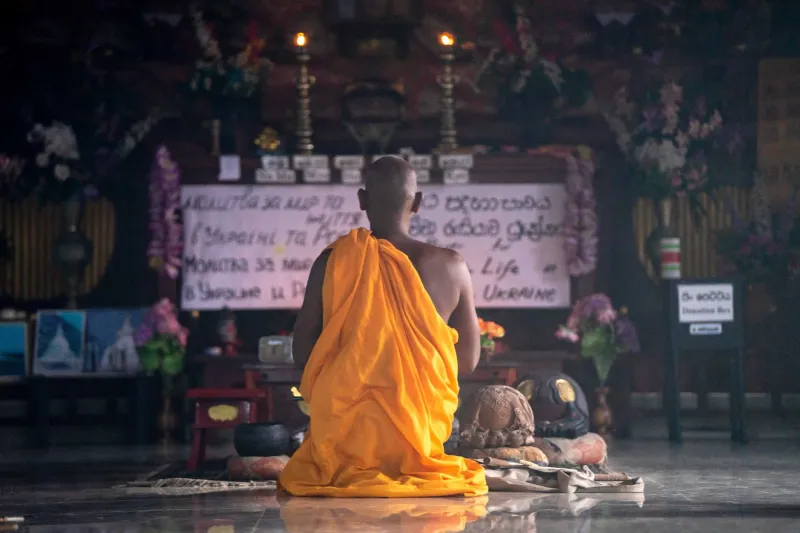
This might look like a simple evening ritual that closes the workday before family time begins. It might be a practice of pausing before answering a demanding message, treating that pause as a gate one chooses whether or not to open. It might be the conscious decision to designate certain spaces in the home—a reading chair, a meditation corner—as places governed by different rules than the rest of the household. None of these practices require religious affiliation. They require only the willingness to treat one's interior life as something worth a threshold.
What the Temple Teaches About Saying No
The deepest lesson that Japanese temple gatekeeping offers is perhaps the simplest: that a no, offered with clarity and without cruelty, is an act of spiritual integrity. When a temple closes its innermost precinct to casual visitors, it is not punishing those who are turned away. It is honoring what it holds. The restriction is an expression of value, not hostility.
This distinction matters enormously in a culture where refusal is so frequently experienced—and offered—as a form of rejection. To say no to a request is not to say no to a person's worth. It is to say yes to the integrity of what one is protecting: time, attention, emotional availability, the quiet necessary for one's own inner life to remain coherent.
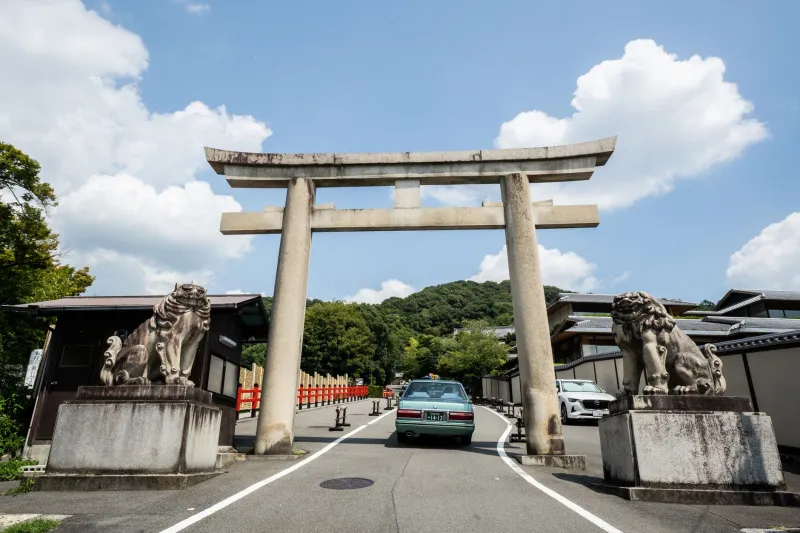
Japanese temple tradition has encoded this understanding in stone and rope and ritual for centuries. The torii gate of a Shinto shrine, the solemn sanmon of a Buddhist complex, the shimenawa strung between sacred trees—all of these are, at their core, the same statement rendered in different materials: here, something is held in high regard, and that regard requires a line.
Carrying the Gate With You
You need not live near a temple to carry this wisdom into daily life. The practice of gatekeeping is ultimately an interior one. It begins with the recognition that your attention, your energy, and your presence are not infinite resources to be distributed on demand—they are sacred in the most practical sense of the word: finite, irreplaceable, and worthy of protection.
Begin simply. Identify one threshold in your life that currently has no gate. Perhaps it is the hour before sleep, constantly interrupted by the demands of others. Perhaps it is a relationship in which your availability is assumed rather than invited. Perhaps it is the habit of answering every request with an immediate yes, before you have had a moment to consult your own interior.
Build a gate there. It need not be dramatic. A short pause, a gentle but clear response, a designated time when you are genuinely unavailable—these are the modern equivalents of the temple's purification basin and guardian figures. They do not announce hostility. They announce that something within is held in high regard.
The ancient designers of Japan's sacred spaces understood something that the hyperconnected modern world seems to have forgotten: that the quality of what is possible inside a threshold depends entirely on how seriously the threshold is maintained. The sacred no is not a closing. It is, in the deepest sense, an opening—to the possibility of a life that is genuinely, rather than nominally, your own.