Dissolving the Self: What Japanese Monastic Humility Offers a Culture Obsessed With Standing Out
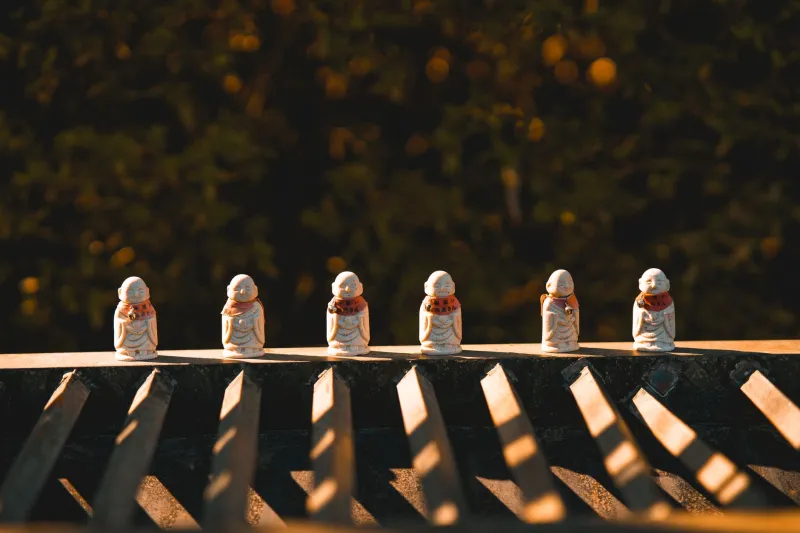
There is a particular kind of silence that settles over a Japanese Buddhist temple in the early hours of the morning — not the silence of absence, but the silence of everything unnecessary having been stripped away. The monks who inhabit these spaces have, through years of deliberate practice, learned to move through the world with a quality that Western culture rarely celebrates: the willingness to become less.
In America, the prevailing spiritual grammar runs in the opposite direction. Self-help shelves overflow with titles promising to help readers discover their authentic voice, build their personal brand, and unlock their highest potential. The exceptional self is not merely encouraged — it is, in many quarters, treated as a moral imperative. Against this backdrop, the monastic ideal of muga — the dissolution of ego, the release of the self as a fixed and precious object — can appear not only foreign but faintly threatening.
And yet, something is clearly missing. The very intensity of America's investment in self-optimization has produced, paradoxically, epidemic levels of anxiety, burnout, and what many practitioners describe as a profound spiritual exhaustion. It is into this exhaustion that the ancient disciplines of Japanese Buddhist monasticism quietly speak.
The Weight of the Exceptional Self
To understand what Japanese monastic practice offers, it helps first to appreciate the full weight of what Western individualism demands. The American self is expected to be authored, curated, and continuously improved. Social media has made this pressure both more visible and more relentless. The result is a peculiar form of suffering: the chronic sense that one's life is a performance that could always be better reviewed.
Japanese Buddhist thought, particularly as it is embodied in the Zen and Tendai traditions, diagnoses this suffering with considerable precision. The concept of ga — the grasping, clinging sense of self — is understood not as a neutral feature of human experience but as the root cause of dukkha, the pervasive unsatisfactoriness that colors unexamined life. The monk does not pursue ego-dissolution as an act of self-punishment. Rather, the practice is understood as a form of liberation: the gradual, patient release of a burden that was never truly ours to carry.
What Renunciation Actually Looks Like
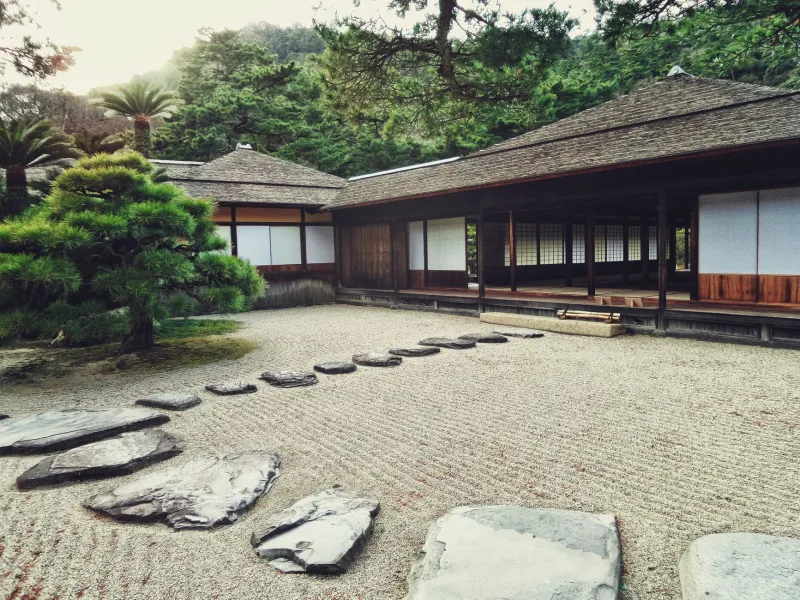
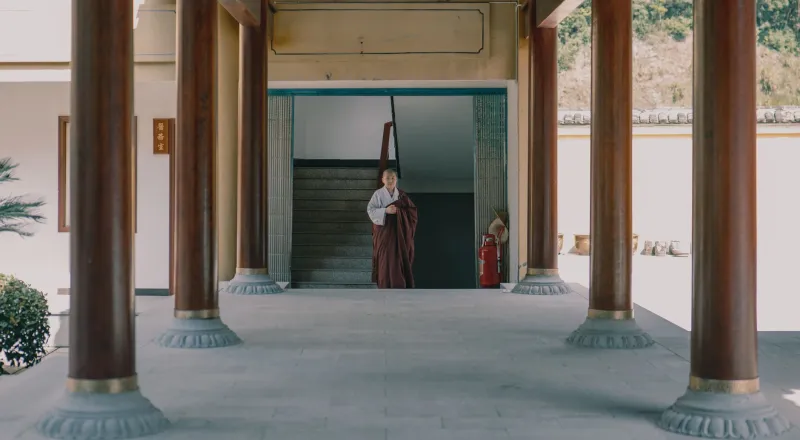
It is worth being precise here, because Western audiences often misunderstand renunciation as a kind of spiritual subtraction — a giving up of pleasures, relationships, and ambitions. In Japanese monastic life, renunciation is better understood as a reorientation of attention. The monk who rises before dawn to sweep the temple courtyard is not performing an act of self-denial. He is practicing a form of presence that renders the distinction between self and task temporarily irrelevant.
Several Japanese-American Buddhist practitioners have described this distinction in terms that resonate deeply with their experience of living between two cultures. One Zen practitioner based in the San Francisco Bay Area, who trained for several years at a temple in Kyoto before returning to the United States, put it this way: the hardest thing about coming back was not the noise or the pace, but the constant expectation that she should have a strong opinion about herself — about who she was, what she stood for, where she was headed. In the temple, those questions had simply not been the point.
This is the priest's paradox as it reveals itself in lived experience: the monk does not achieve less by releasing the self. In many cases, the quality of attention, craftsmanship, and compassion that emerges from sustained ego-dissolution is extraordinary by any measure. The paradox is that greatness, in the monastic understanding, arrives not through striving for it but through the patient removal of the obstacles to it.
The Cultural Friction Is Real — and Instructive
It would be dishonest to smooth over the genuine friction between these two worldviews. Japanese monastic culture developed within a social context that has historically valued collective harmony, hierarchical deference, and the subordination of individual desire to communal obligation. American culture, whatever its internal diversity, has been shaped by deeply different assumptions about the primacy of the individual, the virtue of self-expression, and the right to personal reinvention.
These are not trivial differences, and the growing interest among American spiritual seekers in Japanese Buddhist practice sometimes obscures them. There is a real risk of what scholars of religion call "spiritual bypassing" — the selective adoption of practices stripped of their demanding cultural and ethical context. A weekend meditation retreat that teaches mindfulness as a stress-management tool while leaving the practitioner's fundamental orientation toward self-promotion entirely intact is not engaging with the monastic tradition in any serious way.
And yet, the friction itself is instructive. The discomfort that many Americans feel when genuinely confronted with the monastic ideal — the slight vertigo of imagining a life in which one's personal brand simply does not matter — is a diagnostic signal. It points toward something real about the costs of the exceptional-self project that is not always easy to name.
Practicing Humility Without a Monastery
The practical question, for the American reader who is neither able nor inclined to enter monastic life, is what can be authentically carried across this cultural distance. The answer, according to practitioners who have thought carefully about it, lies less in adopting specific techniques than in cultivating a particular quality of relationship with one's own experience.
Some entry points are concrete. The Japanese monastic practice of soji — communal cleaning as a form of meditation — can be practiced in any household. The discipline is not in the cleaning itself but in the quality of attention brought to it: the willingness to perform an ordinary, unwitnessed task without making it mean something about oneself. Similarly, the practice of oryoki, the ritualized, mindful consumption of meals in the Zen tradition, invites a relationship with food that is attentive and grateful rather than indulgent or performative.
But perhaps the most transferable gift of the monastic tradition is simpler than any specific practice. It is the permission — radical in the current cultural climate — to allow oneself to be ordinary. To do good work without needing it to be exceptional. To be present with another person without calculating what the interaction might yield. To sit quietly without producing anything at all.
A Different Kind of Ambition
At Koumarusan Hourinji, we return often to the idea that ancient wisdom does not arrive as instruction but as invitation. The Japanese Buddhist monastic tradition does not demand that Americans abandon their lives, their ambitions, or their identities. It asks, with the quiet insistence of a temple bell heard across a still courtyard, whether the self being so carefully constructed and defended is really the source of the richness one is seeking.
The monks who choose simplicity are not, in most cases, choosing emptiness. They are choosing a different kind of fullness — one in which the space vacated by the grasping self becomes available for something quieter and, many would argue, more real. Whether one finds that argument compelling may depend less on intellectual persuasion than on having, at least once, allowed oneself to be genuinely still.
That stillness is available to anyone. It does not require robes, a shaved head, or a flight to Kyoto. It requires only the willingness to set down, for a moment, the project of being exceptional — and to discover what remains.