Bells Before Dawn: How Japanese Monastic Rhythms Can Bring Order to the American Day
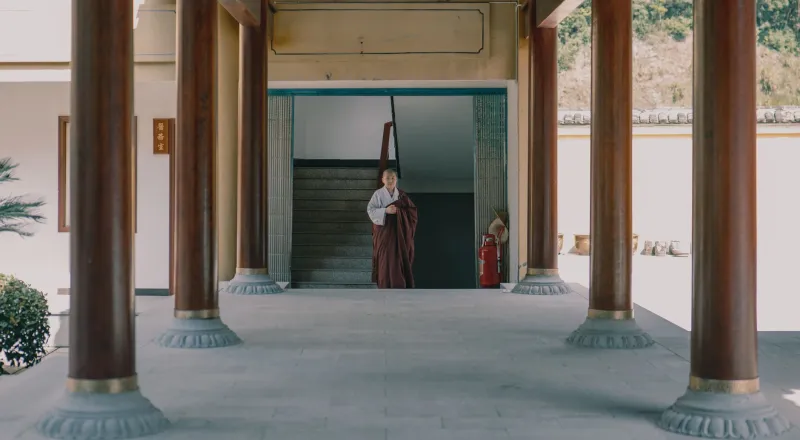
There is a particular quality of silence that exists in a Japanese Buddhist monastery at four in the morning. It is not the silence of absence, but of readiness—the held breath before a bell strikes and dozens of robed figures rise from their sleeping mats with unhurried precision. This is not silence born of emptiness. It is the silence of a life organized around intention.
For most Americans, the morning begins not with a bell but with the jarring pulse of a smartphone alarm, followed almost immediately by the gravitational pull of notifications, obligations, and the low-grade anxiety that has become the unofficial background music of contemporary life. The contrast could not be more stark. Yet within that contrast lies an invitation—one that does not require renouncing the world, only reconsidering how one inhabits it.
The Architecture of the Monastic Day
Japanese Zen and Tendai monasteries operate according to a structure known as samu and zazen—a disciplined alternation between meditative work and seated contemplation. The day is not left to individual discretion. It unfolds according to a shared temporal map, where meals, practice, labor, and rest each occupy their appointed hours with minimal negotiation.
The morning hours before sunrise are treated as the most sacred portion of the day. Monks at temples such as Eiheiji, the grand Soto Zen monastery in Fukui Prefecture, rise at approximately three-thirty in the morning to begin zazen. This is followed by formal chanting, then the first meal of the day—oryoki—conducted in complete silence according to a precise ritual involving nested bowls, specific utensils, and a series of prayers acknowledging the labor that produced the food.
What is striking to the outside observer is not the austerity of this schedule, but its coherence. Every transition is marked. Every activity carries its own form of reverence. Nothing is incidental.
Why Structure Is a Spiritual Practice
Modern psychology has arrived, through a somewhat different path, at conclusions that Japanese monastics understood intuitively: human beings function with greater clarity, purpose, and emotional stability when their days possess reliable rhythmic structure.
The concept of temporal architecture—the deliberate design of one's daily timeline—has gained significant traction among behavioral researchers studying decision fatigue, cognitive load, and habit formation. When the brain does not need to negotiate the terms of each activity anew, it conserves resources for deeper engagement. The monk who rises at the same hour each morning without deliberation is not a creature of rigid habit. He is, in fact, freer than the person who must decide each evening when to sleep and each morning whether to rise.
The Japanese term katachi—meaning form or shape—captures something of this principle. Form is not constraint. It is the vessel that allows content to exist. A monastery without its bells and schedules would be merely a collection of buildings. With them, it becomes a living practice.
Translating the Temple to the Townhouse
Adapting monastic principles to an American household does not require a vow of silence or a four-thirty alarm. What it requires is a willingness to treat the design of one's day as a matter of some consequence—not merely logistical, but spiritual.
Consider the following frameworks drawn from Japanese monastic tradition:
The Threshold Moment. In Japanese temples, transitions between activities are marked by physical and auditory cues—the ringing of a bell, the removal of footwear, the bowing at a doorway. These are not decorative customs. They are neurological resets, signaling to the nervous system that one mode of engagement is ending and another is beginning. Americans might create their own threshold moments: a brief pause at the kitchen doorway before beginning the morning, a single deep breath before opening a laptop, a cup of tea consumed without screens before the workday commences.
The Oryoki Principle. The monastic meal ritual is, at its core, an act of radical attention. The food is simple. The quantity is measured. The gratitude is expressed. Translating this into daily American life might mean designating at least one meal per day as a screen-free, conversation-free period of genuine presence—not as punishment, but as an opportunity to notice what one is actually consuming, in every sense.
Samu as Household Dharma. In Zen tradition, samu refers to mindful physical labor—sweeping the courtyard, chopping vegetables, maintaining the temple grounds. This work is not considered inferior to meditation; it is considered its continuation. Americans who approach household tasks—washing dishes, folding laundry, tending a garden—with this understanding may find that the boundary between the sacred and the ordinary begins, quietly, to dissolve.
The Appointed Hour of Stillness. Perhaps the most transferable monastic gift is the simple act of protecting a specific, non-negotiable time each day for quiet. This need not be formal seated meditation. It might be ten minutes of stillness before the household wakes, a brief walk taken without earbuds, or a few moments of journaling conducted by hand. The content matters less than the consistency. The monastery does not ask its residents whether they feel like practicing today. The bell rings regardless.
The American Obstacle: Optionality
One of the genuine challenges of importing monastic structure into American life is that American culture is, at its philosophical core, deeply resistant to prescribed routine. The freedom to choose—what to eat, when to sleep, how to spend each hour—is not merely a lifestyle preference here. It is something approaching a cultural value.
Yet this abundance of optionality carries its own burden. When everything is available at every moment, nothing occupies its proper place. The Japanese concept of ma—the meaningful interval between things—cannot exist in a life where there are no intervals, only an unbroken stream of stimulation and choice.
The monastic insight is not that freedom is bad. It is that certain freedoms must be voluntarily surrendered in order for deeper freedoms to emerge. The monk who does not decide each morning whether to meditate is free, during that meditation, to go somewhere the perpetually-deciding mind cannot reach.
Beginning Where You Are
The path toward a more structured, intentional daily life does not begin with a dramatic overhaul. It begins, as most genuine practices do, with a single, repeatable act performed at the same time each day until it no longer requires an act of will.
Perhaps it is the morning cup of tea, taken in silence, before the phone is consulted. Perhaps it is a five-minute period of stillness before sleep. Perhaps it is the simple act of eating one meal each week with the deliberate attention of a monk holding his oryoki bowl—aware of the hands that prepared the food, the soil that produced it, the fortune of having it at all.
The bells of Eiheiji ring whether or not anyone is listening. The structure exists whether or not one chooses to enter it. The invitation, as it has always been, remains open.