The Voice of Bronze: Bringing Japanese Temple Bell Resonance into Your Daily Spiritual Life
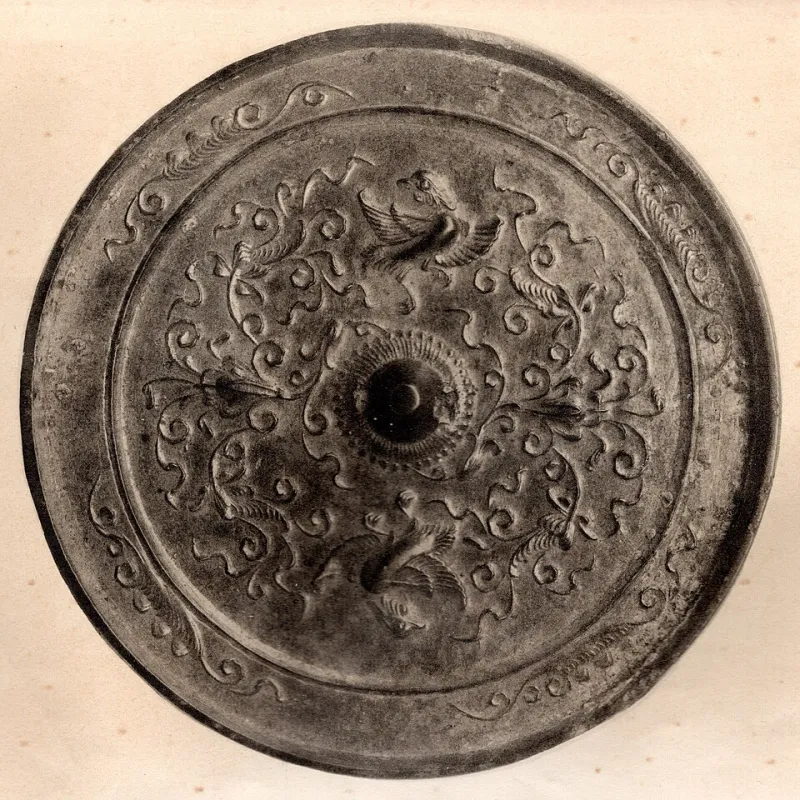
Photo: Unknown author (Scanned and edited by 雪野滾滾, the uploader.), Public domain, via Wikimedia Commons
At the stroke of midnight on New Year's Eve, Buddhist temples throughout Japan ring their great bronze bells exactly one hundred and eight times. The number is not arbitrary. In Buddhist teaching, one hundred and eight represents the count of human earthly desires — the cravings and aversions that bind the mind to suffering. With each resonant stroke, one desire is said to dissolve. By the final toll, the gathered community steps into the new year lighter, clearer, and, in some traditional understanding, genuinely transformed by sound.
This practice, known as joya no kane, is among the most vivid expressions of a principle that runs through both Shinto and Buddhist sacred tradition in Japan: that sound, specifically the sustained, complex resonance of a well-cast bell, is not merely pleasing to the ear but is itself a vehicle of spiritual transmission. The bell does not simply signal a moment of prayer. It is, in some meaningful sense, the prayer itself.
For American practitioners drawn to Japanese spiritual traditions, this understanding opens a practical and philosophically rich avenue of home practice — one that requires neither a temple, a formal initiation, nor fluency in Japanese liturgical language.
A Brief Genealogy of the Sacred Bell
The Japanese temple bell, or bonshō, arrived in the archipelago from the Asian continent alongside Buddhism itself, roughly in the sixth century of the common era. Cast in bronze through techniques refined over generations, the great bells that hang in the wooden frames of major temple complexes are among the most sophisticated acoustic instruments ever produced. Their sound is not a single tone but a layered phenomenon: a fundamental pitch surrounded by a family of overtones that shift and evolve over the course of a minute or more as the vibration slowly dissipates.
This sustained, evolving resonance is referred to in Japanese as yo no ne — the lingering sound, the tone that remains after the strike. Practitioners and teachers across traditions have long understood this lingering quality as the most spiritually significant aspect of the bell's voice. The initial strike calls attention; the yo no ne is where the real work occurs, the interval in which the mind, having been arrested by the sound's arrival, is gently escorted into stillness.
Distinct from the large bonshō are the smaller hand bells and shrine bells encountered throughout Japanese sacred life. The suzu, a cluster of small hollow spheres containing pellets that produce a shimmering, overlapping ring, is shaken by worshippers before Shinto shrines to summon the attention of the kami, or divine presences. The rin, a bowl-shaped bell struck with a padded mallet and found on Buddhist household altars throughout Japan, produces a clear, sustained tone used to mark the beginning and end of chanted sutras. Each instrument carries its own lineage, its own liturgical function, and its own distinct acoustic character.
What Sound Does to the Practicing Mind
The spiritual understanding of bell resonance as transformative is not merely poetic. Researchers studying the neurological effects of sustained tonal sound have documented measurable shifts in brainwave activity in response to the kind of complex, slowly decaying resonance characteristic of bronze meditation bells. In particular, frequencies associated with alpha and theta brainwave states — states linked to relaxed alertness, creative insight, and the early stages of meditative absorption — appear in EEG readings of subjects listening to extended bell tones.
Sound healers working in the United States who incorporate Japanese bell instruments into their practice describe a phenomenon their clients frequently report: that the bell's resonance seems to locate and release areas of held tension that verbal instruction or breath-based techniques had not reached. One practitioner based in Portland, Oregon, who trained for several years in Japan before establishing her current work, describes the bell as "a direct address to the nervous system — it bypasses the thinking mind and speaks to something more fundamental."
This description aligns with the understanding articulated by Japanese Buddhist teachers across centuries: that the bell's sound operates on a register below conceptual thought, reaching what some traditions call the buddha-nature or original mind that underlies the ordinary, conditioned self.
Selecting a Bell for Home Practice
For American practitioners considering the incorporation of bell resonance into their daily spiritual life, the first practical question is one of selection. The market for meditation bells in the United States ranges from mass-produced decorative items with minimal acoustic quality to carefully crafted instruments imported directly from Japanese foundries with centuries of experience. The difference matters.
When evaluating a rin or meditation bowl for home practice, attend first to the length and complexity of the sustain. A quality bell, when struck with appropriate force using a padded mallet, should produce a tone that remains audible and continues to evolve for at least thirty to forty-five seconds. Listen for the overtones that emerge and shift as the fundamental pitch decays — this layering is the acoustic signature of a well-crafted instrument and the source of its meditative effect. A bell that produces a flat, brief tone, however pleasant its initial sound, will not carry the practice in the same way.
Reputable sources for authentic Japanese bells in the American market include specialist import shops with established relationships with Japanese craftspeople, as well as a small number of online retailers who provide detailed provenance information and audio demonstrations. Prices for a quality rin suitable for home practice range from approximately eighty to several hundred dollars, depending on size, material, and origin. This is an investment worth making carefully.
A Simple Daily Practice
The following structure, drawn from both Japanese household Buddhist practice and the guidance of contemporary teachers, offers a starting point for American practitioners establishing a bell-centered daily ritual.
Choose a consistent time — early morning or the transition from workday to evening are both traditionally favored. Seat yourself comfortably before a small altar or simply a quiet surface. Hold the bell in your non-dominant hand, or place it before you on its cushion. Before striking, take three slow, complete breaths. Allow the exhale of the third breath to coincide with the moment of the strike.
Then listen. Do not direct the listening or analyze the sound. Simply follow the yo no ne — the lingering resonance — as it moves through its arc of decay, attending to it as you would attend to a conversation with someone you deeply respect. When the sound has fully dissolved into silence, remain with that silence for a moment before deciding whether to strike again.
Most teachers recommend beginning with three strikes in sequence, allowing the silence between each to settle fully before proceeding. Over time, you may find that the practice naturally expands — that the bell's voice opens a quality of attention that extends beyond the formal period of sitting and begins to color the ordinary hours of the day.
At Koumarusan Hourinji, we understand this as the deeper purpose of every sacred instrument: not to transport the practitioner to another world, but to make this one audible again — to restore the hearing that the noise of ordinary life has, temporarily and reversibly, taken away.