Purposeful Waiting: What Japanese Temple Traditions Reveal About the Hidden Value of Time
The Uncomfortable Truth About How We Wait
Americans are not taught to wait. They are taught to optimize, to multitask, to fill every idle moment with something measurable. The two-minute pause at a coffee counter becomes a scroll through email. The quiet between meetings becomes a podcast. Even sleep, that most ancient of necessities, is now tracked, scored, and improved upon. In this landscape, waiting has become a problem to be solved rather than an experience to be inhabited.
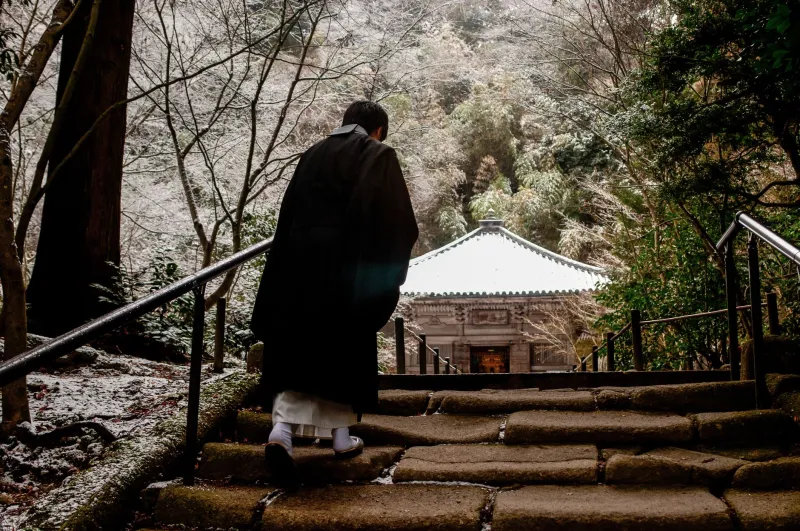
Yet within the centuries-old rhythms of Japanese temple life, waiting occupies a place of profound spiritual significance. It has a name — matsu — and it carries a weight of meaning that the English word simply cannot hold. To understand matsu is not merely to reframe impatience. It is to encounter an entirely different philosophy of time, one that the traditions preserved at sites like Koumarusan Hourinji continue to embody with quiet authority.
What 'Matsu' Actually Means
The Japanese verb matsu (待つ) translates literally as "to wait," but in the context of temple practice, it implies something far more intentional. It is waiting with awareness. Waiting with direction. Waiting as an act of faith that what is arriving — whether a season, a ceremony, a moment of clarity, or a divine presence — is worthy of unhurried anticipation.
In many of Japan's most revered temples, the architecture itself enforces this practice. Long approach paths, called sandō, stretch between the outer gate and the main hall, sometimes for hundreds of meters. These are not design inefficiencies. They are deliberate invitations to slow the body so that the mind may follow. The pilgrim who rushes this corridor misses its entire purpose. The one who walks it with attention arrives at the inner sanctum genuinely changed.
Similarly, certain sacred rituals within Japanese temple calendars are structured around the discipline of anticipation. Ceremonies tied to the agricultural cycle, to lunar phases, or to the anniversaries of founding priests do not bend to convenience. They arrive when they arrive. The practitioner's task is not to rush toward them but to prepare — internally, spiritually — for their coming.
The Anxiety Beneath Our Efficiency
There is a reason Americans struggle so acutely with waiting. Beneath the cultural celebration of productivity lies a deeper discomfort: the fear that time unoccupied is time wasted, and that wasted time is a kind of moral failure. This anxiety is not new, but it has intensified dramatically in the age of on-demand everything. When a streaming service loads in seconds and a grocery delivery arrives in an hour, the expectation of immediacy bleeds into every corner of life — including the corners where immediacy was never meant to live.
Relationships, healing, creative breakthroughs, spiritual development — these are not on-demand experiences. They unfold on their own schedules, in their own time, often in ways that cannot be hurried without being harmed. The Japanese temple tradition understood this long before neuroscience had language for it. The monk who sits in meditation for hours is not being unproductive. He is practicing the radical act of remaining present without demanding that the present yield immediate results.
Bringing Temple Patience Into the American Day
The good news is that matsu does not require a pilgrimage to Japan or a monastic lifestyle. It requires only a willingness to reframe the experience of waiting as it already exists in your daily life.
Consider the moments that currently produce the most friction: the long line at the Department of Motor Vehicles, the delayed flight at O'Hare, the doctor's office that is running forty-five minutes behind schedule. The conventional response is frustration, phone-reaching, restless movement. The matsu response is something else entirely — a deliberate settling into the pause, a recognition that this unscheduled interval is, in fact, time being offered rather than time being stolen.
One practice drawn from temple tradition involves what might be called threshold awareness. Before entering any new space or beginning any new task, take three measured breaths and acknowledge the transition you are making. This is a simplified echo of the ritual purification that temple visitors perform at the temizuya, the stone water basin near a shrine's entrance. The act of cleansing hands before entering sacred space is not merely hygienic — it is a physical declaration that what follows deserves full attention. Applying this principle to ordinary transitions throughout your day can gradually rewire the relationship between movement and mindfulness.
Another approach involves what Japanese temple communities sometimes call shizuka na kitai — quiet anticipation. Rather than filling every pre-event interval with distraction, practice sitting with the fact of what is coming. If you have a difficult conversation ahead, a medical result pending, or a creative project approaching its deadline, resist the urge to numb the anticipation. Let it be present. Notice how the waiting itself contains information about what matters to you, what you fear, and what you hope for.
The Garden as Teacher
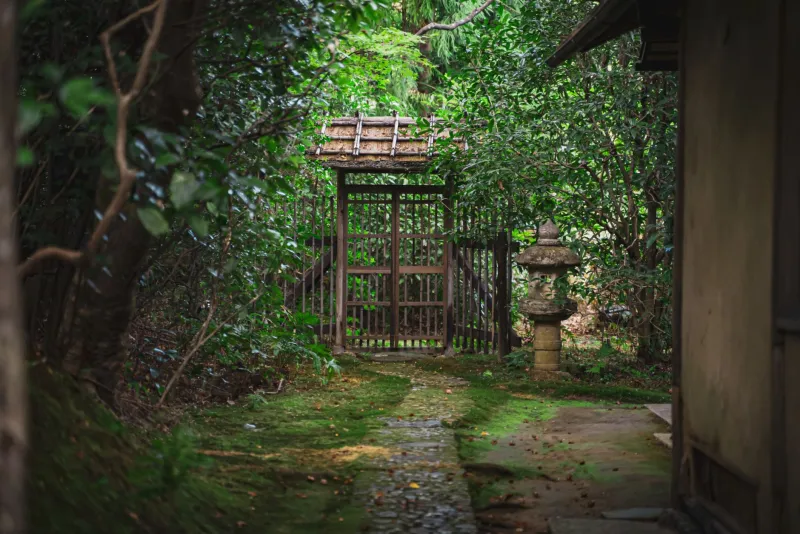
Japanese temple gardens offer perhaps the most accessible visual metaphor for the practice of matsu. A carefully raked gravel garden does not change quickly. A moss garden requires decades to reach its fullness. The gardeners who tend these spaces understand that their work will not be completed in their lifetimes — and this is not a tragedy but a teaching. They are participating in something larger than their own timeline.
For Americans accustomed to quarterly results and annual performance reviews, this perspective can feel almost incomprehensible. Yet it also carries a strange relief. Not everything must be finished by you. Not every process must yield results within your preferred schedule. Some things simply take the time they take, and the role of the practitioner — whether monk, gardener, or ordinary person navigating a complicated life — is to tend faithfully rather than to force prematurely.
Reclaiming Time as a Spiritual Resource
The temples of Japan do not treat time as a commodity to be spent efficiently. They treat it as a sacred medium through which meaning gradually becomes visible. This is a profoundly countercultural stance in any modern society, but it is one with deep roots and demonstrable wisdom.
When you next find yourself waiting — truly waiting, with nowhere to rush and nothing to optimize — consider what the tradition of matsu is quietly offering. The queue, the delay, the uncertain interval: these are not failures of the system. They are invitations, however unglamorous, to practice the ancient and undervalued art of being fully present to a moment that has not yet resolved itself.
In that unresolved space, if you allow it, something essential can surface. Clarity, patience, a deeper acquaintance with your own interior life. The Japanese temple tradition has known this for centuries. The question is whether the modern American is willing to wait long enough to discover it.