Unhurried by Design: What Japanese Temple Calendars Reveal About the Wisdom of Sacred Timing
There is a particular kind of frustration that belongs almost exclusively to the modern American experience: the feeling that something meaningful is taking too long. Whether it is a career milestone, a relationship deepening, or a moment of personal clarity, the cultural reflex is to find a faster route. Apps promise accelerated meditation. Weekend retreats offer compressed enlightenment. Self-help frameworks guarantee transformation in thirty days or fewer.
Japanese temple tradition offers no such promises. And that, it turns out, is precisely the point.
A Calendar Built Around Waiting
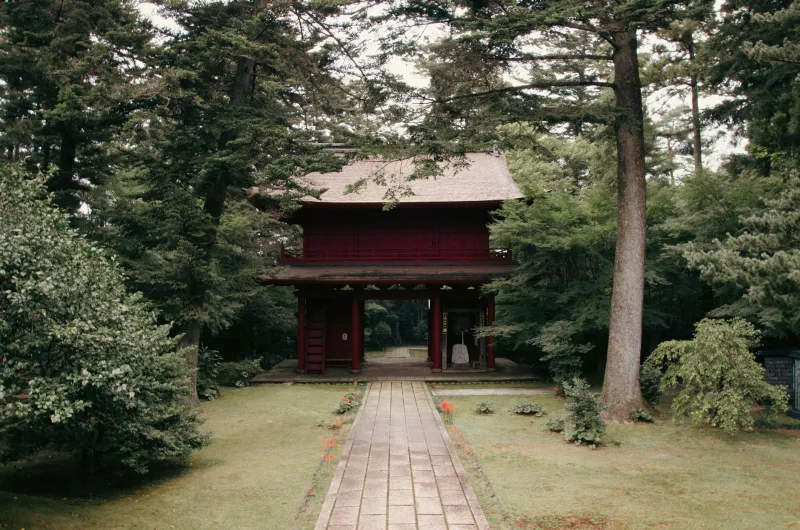
At temples throughout Japan—including those rooted in the Tendai and Shingon schools of esoteric Buddhism—the spiritual year is not organized around productivity or convenience. It is organized around readiness: the readiness of the earth, the readiness of the body, and ultimately, the readiness of the practitioner's interior life.
The temple calendar observes seasonal transitions with a precision that borders on reverence. The arrival of spring is not merely a meteorological event; it is a spiritual threshold. Plum blossoms are not decorative—they are instructional. The first frost of autumn carries doctrinal weight. Each natural shift signals a change in the quality of contemplative attention that is appropriate, possible, and necessary.
This is not superstition. It is a sophisticated understanding that human beings are not separate from the rhythms of the natural world, and that spiritual growth—like agricultural growth—cannot be forced into a timeline that ignores those rhythms.
The Discipline of Seasonal Incompletion
One of the more disorienting aspects of the temple approach to time, for Western visitors, is the deliberate acceptance of incompletion within any given season. A particular ceremony may begin in late autumn and not reach its full expression until the following spring. A practitioner may begin a period of intensive chanting during the cold months, understanding that the insight being sought will not arrive until the warmth returns and the body has passed through its winter contraction.
This is not delay. It is timing—a distinction that the American cultural vocabulary struggles to honor.
In cities across the United States, from Chicago to Los Angeles, there is enormous social pressure to demonstrate visible progress. Stagnation is read as failure. Waiting is read as passivity. The person who says, "I am still sitting with this question," is often met with impatience rather than respect. Japanese temple culture, by contrast, treats sustained waiting as an active and disciplined form of spiritual labor.
What the Cherry Blossom Actually Teaches
Most Americans have encountered hanami—the Japanese tradition of gathering beneath cherry blossom trees during their brief flowering—through photographs or tourist accounts. What is less commonly understood is the theological weight behind the practice.
The cherry blossom blooms for approximately one to two weeks each year. Its beauty is inseparable from its brevity. Temple teachings use this phenomenon not simply as a lesson in impermanence, though that dimension is present, but as a lesson in unrepeatable timing. The blossoms do not bloom because you have arrived. They bloom when they are ready, and your only role is to be present and receptive when that moment comes.
This reframes the entire question of waiting. The practitioner who spends months in patient preparation is not wasting time—they are cultivating the quality of attention necessary to receive what the season, when it finally arrives, has to offer. Forced arrival at a moment of beauty before one is prepared to perceive it is, in the temple view, a form of spiritual poverty.
Translating Temple Time Into American Life
Adopting a temple-inspired relationship with time does not require relocating to rural Japan or abandoning the rhythms of contemporary American life. It requires, instead, a series of deliberate reorientations.
Begin by mapping your own seasonal thresholds. Rather than setting annual goals in January and evaluating them in December, consider which questions or intentions feel appropriate to each season of your personal year. What are you being asked to gestate during the darker months? What wants to emerge in the warmth? What must be released before the ground freezes again?
Practice the art of the appropriate question. Temple practitioners are trained to distinguish between questions that are ripe for resolution and questions that require further fermentation. When you encounter a personal dilemma that resists easy resolution, resist the urge to force a conclusion. Instead, ask: Is this question ready to be answered, or is it still in its necessary waiting period?
Create a small seasonal ritual of acknowledgment. This need not be elaborate. On the first day of each meteorological season, pause for ten minutes and note, in writing or in quiet reflection, what the shifting light and temperature are asking of your interior life. Japanese temple practice teaches that the outer world is always speaking to the inner one—the discipline is learning to listen.
Honor incompletion as a stage, not a failure. If a personal project, a healing process, or a spiritual inquiry has not resolved on the timeline you anticipated, resist the American reflex to diagnose this as a problem. Consider instead that you may be in the winter phase of a cycle that will not complete until conditions are appropriate for its spring.
The Radical Patience of the Long View
There is a phrase sometimes used in discussions of Japanese monastic practice: jikan ga kakaru—it takes time. Not as an apology. Not as an excuse. As a statement of natural law.
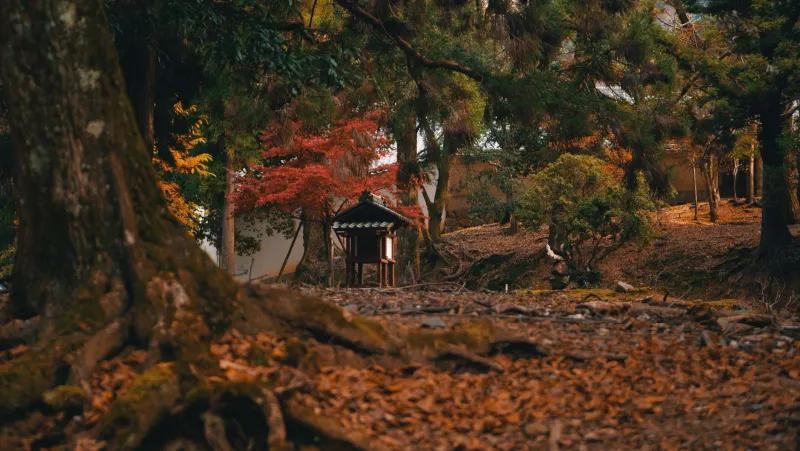
Certain forms of understanding cannot be downloaded or compressed. They accumulate the way silt accumulates at the bend of a river—slowly, invisibly, until one day the landscape has changed in ways that are both subtle and irrevocable. Japanese temple tradition has always known this. Its entire architecture, from the slow growth of moss on stone lanterns to the centuries-long accumulation of ritual observance, is designed to remind the practitioner that the most meaningful things take their own time.
For Americans living inside a culture that pathologizes patience and rewards speed, this is not merely an interesting cultural contrast. It is a form of medicine.
The temple does not rush to greet you. It waits, with confidence, for you to arrive at the pace the journey requires.
And in that waiting, it teaches more than any accelerated program ever could.