Sacred Withdrawal: How Japanese Temples Use Intentional Closure to Cultivate Deeper Devotion
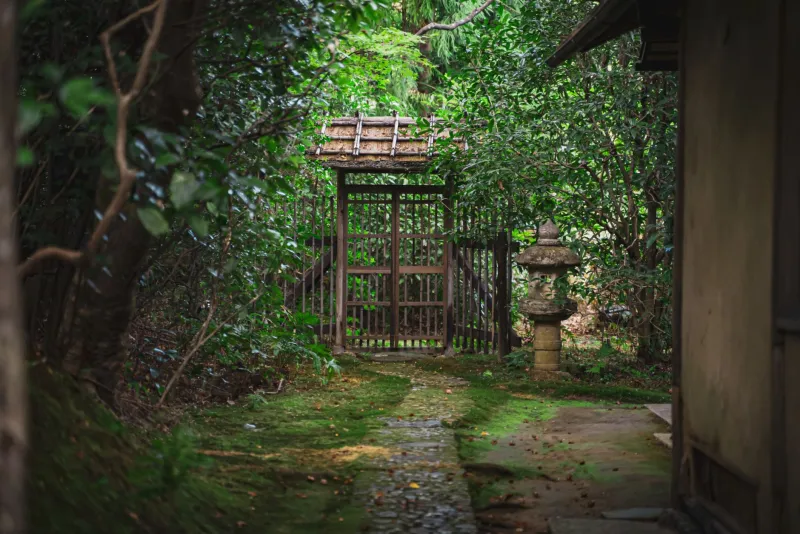
There is a particular kind of longing that only distance can produce. Anyone who has stood before a locked gate — a garden sealed for winter, a beloved place temporarily beyond reach — knows the strange ache of it. In Japanese temple culture, that ache is not accidental. It is, in many instances, carefully and deliberately cultivated.
Across Japan, certain temples and shrines practice what scholars of religion sometimes call hibutsu — the concealment of sacred objects or the periodic closing of inner sanctums to all visitors. Others undergo extended closures for ritual renovation, seasonal ceremony, or the observance of sacred calendars that predate modern tourism by centuries. To the Western eye, accustomed to the logic of perpetual access and on-demand experience, this can appear puzzling, even unwelcoming. But within the framework of Japanese spiritual tradition, intentional closure is among the most generous acts a sacred institution can perform.
The Theology of Hiddenness
The practice of concealing sacred objects — particularly Buddhist statues and Shinto relics — has deep theological roots in Japan. Many of the country's most venerated images are hibutsu, literally "secret Buddhas," revealed to the public only during rare intervals that may span decades. The Zenkoji Temple in Nagano, for instance, houses its principal image in a state of near-permanent concealment. Pilgrims travel hundreds of miles not to see the statue, but to walk in its proximity, to press their hands against a darkened corridor wall, to be near what they cannot directly behold.
This is not withholding in the punitive sense. It is, rather, an acknowledgment that the sacred gains power through restraint. When something is always available, it becomes scenery. When it is occasionally, deliberately beyond reach, it becomes a destination of the spirit.
For American readers navigating a culture of relentless availability — where streaming libraries never empty, where every experience can be purchased on demand — this principle cuts against the grain in a deeply instructive way. The Japanese temple tradition suggests that what we cannot always have, we are more likely to truly value.
Renovation as Ritual
Beyond the concealment of sacred objects, Japanese temples also close for periods of renovation that are themselves understood as spiritually significant events. The rebuilding of the Ise Grand Shrine every twenty years — a practice known as Shikinen Sengu — is perhaps the most dramatic example. The shrine's structures are ritually dismantled and reconstructed on adjacent land, a process that has continued for over thirteen centuries. During transitional periods, access is restricted, and the closure itself becomes part of the sacred narrative.
Smaller temples throughout Japan observe similar, if less elaborate, traditions. A garden may be closed for seasonal transition. An inner hall may be sealed during periods of intensive prayer. What strikes the outside observer is not the inconvenience of these closures but the reverence with which communities receive them. Devotees do not protest. They wait. And in the waiting, something interior shifts.
This patient orientation toward renewal offers a compelling model for American spiritual communities, many of which operate under the pressure of continuous programming, perpetual outreach, and the anxiety of institutional relevance. The Japanese temple tradition invites a different question: what if periodic withdrawal were understood not as failure, but as fidelity to something deeper?
Scarcity as a Spiritual Technology
Economists speak of scarcity as a driver of value. Spiritual traditions have long understood this principle in their own terms. Fasting heightens the appreciation of nourishment. Silence sharpens the ear for meaning. Seasonal restriction — the Advent waiting of Christian tradition, the Ramadan fast of Islam, the Yom Kippur withdrawal of Judaism — has been employed across cultures precisely because the human spirit responds to constraint with a particular quality of attention.
Japanese temple closures operate within this same ancient logic. When a community knows that a particular ceremony occurs only once every several years, or that a specific inner garden opens for only three days each spring, the anticipation itself becomes a devotional act. Plans are made months in advance. Travel is arranged. The approach to the experience carries a weight and intentionality that would be impossible if the doors were simply always open.
For the American seeker, this suggests a practical and genuinely transformative invitation: to deliberately introduce closed seasons into one's own spiritual life. Not as deprivation, but as preparation. Not as absence, but as a form of structured longing that makes the eventual return more luminous.
Creating Your Own Closed Season
The wisdom of intentional closure need not remain confined to ancient temple precincts. Its principles translate with surprising ease into contemporary American life, both in personal spiritual practice and in broader professional rhythms.
Consider, first, the practice of a seasonal sabbath from certain forms of consumption or engagement. Many Americans have experimented with social media fasts or digital detoxes, but the Japanese temple tradition suggests something more architecturally intentional — a defined period, marked by its beginning and end, during which a particular practice, space, or relationship is allowed to rest. The closure is not abandonment. It is stewardship.
For those who maintain a home altar, a meditation corner, or any dedicated spiritual space, a deliberate seasonal closing — even as simple as covering the space with a cloth for a designated period — can transform the mundane into the ceremonial. When the covering is removed and the space reopened, the act of return carries a depth it could not hold if the space had simply remained unchanged and always accessible.
Communities, too, might consider what it would mean to protect certain gatherings or practices from the pressure of perpetual availability. A study group that meets only on the solstices. A prayer practice observed only during a specific season. The scarcity of these encounters, far from diminishing their value, concentrates it.
What the Locked Gate Teaches
There is a final lesson embedded in the Japanese practice of intentional closure that may be the most quietly radical of all: the acknowledgment that not everything sacred is meant for every moment.
In a culture that has largely rejected the idea of sacred time in favor of personal convenience, the locked temple gate stands as a gentle but firm corrective. It says, in effect: this is not yours to access whenever you wish. It belongs to a rhythm larger than individual preference. Come when the time is right, and what you find will be worthy of the journey.
At Koumarusan Hourinji, we understand that the wisdom carried within Japan's sacred traditions is not merely historical curiosity. It is living instruction. The practice of intentional closure — whether in the grand theater of a centuries-old shrine or in the quiet discipline of a personal spiritual life — teaches us that devotion deepens not in the constant presence of the sacred, but in the patient, faithful waiting for its return.
The gate will open. And when it does, you will be ready.