When Temples Turn Away Gold: The Quiet Courage of Japanese Priests Who Refuse the Market
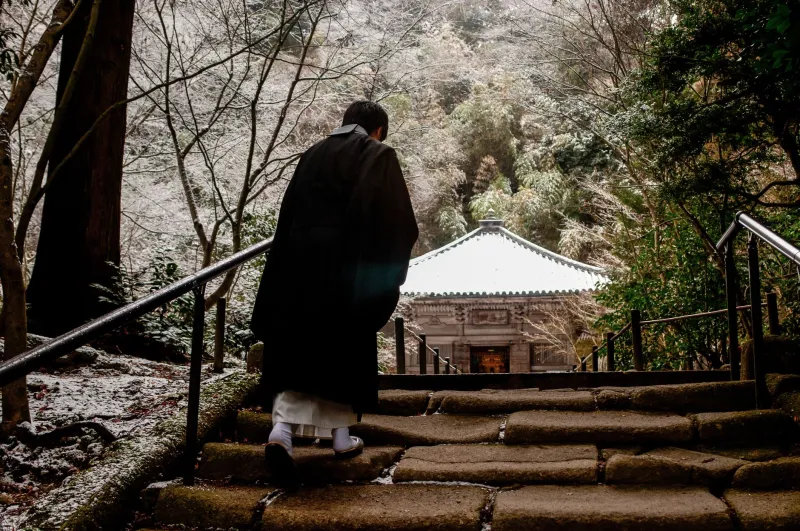
There is a particular kind of courage that receives no applause. It does not trend on social media, generate revenue, or attract feature coverage in business magazines. It is the courage of refusal — the deliberate, dignified act of saying no to something the world insists you should want.
In Japan, this courage has a long institutional history. Across the country, Buddhist temples and Shinto shrines have for centuries maintained a complex and often counterintuitive relationship with material prosperity. Many of the most revered sacred sites are also the most deliberately inaccessible — not because their keepers lack ambition, but because those keepers understand something that modern commerce routinely forgets: that certain things are diminished by the very act of selling them.
The Pressure Is Real, and It Is Growing
To appreciate the significance of a temple's refusal, one must first understand the economic landscape in which Japanese religious institutions now operate. Tourism to Japan has surged dramatically over the past decade, and sacred sites — with their photogenic gardens, ancient architecture, and atmospheric rituals — have become primary destinations for international visitors. The commercial logic is straightforward: more visitors means more revenue, and more revenue means institutional survival.
This logic has not gone unnoticed. Some temples have expanded their gift shops, partnered with travel companies, and opened their grounds to commercial photography shoots. A handful of sacred spaces now host corporate retreats, wellness brand collaborations, and influencer-focused access programs. The pressure to participate is not trivial. Aging infrastructure requires costly maintenance. Younger generations of potential clergy are drawn to secular careers. The financial argument for commercialization is, in many instances, genuinely compelling.
And yet, a significant number of Japanese priests have looked at this landscape and chosen differently.
What Refusal Actually Looks Like
The refusals are rarely dramatic. There is no press release, no public statement of principle, no viral moment of righteous defiance. They tend to be quiet, almost administrative in their delivery. A temple declines a partnership inquiry from a luxury travel brand. A head priest informs a social media company that their grounds will not serve as a backdrop for a promotional campaign. A shrine restricts photography during specific ritual periods, even when doing so costs them considerable tourist traffic.
At Koumarusan Hourinji, the wisdom embedded in these choices is recognizable. The Japanese concept of ma — the sacred quality of interval, of meaningful space between things — applies not only to sound and garden design but to institutional boundaries as well. A temple that accepts every invitation, accommodates every commercial request, and opens every door to every visitor has, in a very real sense, eliminated the ma that gives it spiritual weight. The space between the sacred and the ordinary is not incidental to a temple's function; it is the function.
Priests who understand this will sometimes explain their refusals in terms that sound almost paradoxical to Western ears. One does not refuse the corporate partnership because the money is unimportant, they might say. One refuses because the money is important — and because accepting it would purchase something far more costly than it provides.
Protecting the Mission by Defining Its Edges
American readers may find a useful parallel in the language of nonprofit governance, where organizational mission statements exist precisely to help institutions decline opportunities that, however lucrative, pull them away from their core purpose. A food bank does not open a restaurant. A hospice does not launch a fitness brand. The mission defines not only what an organization does, but what it deliberately refuses to do.
Japanese temple priests operate with a similar — if more spiritually inflected — logic. The mission of a sacred site is not merely to provide a pleasant aesthetic experience or to generate revenue sufficient for its own continuation. It is to maintain a particular quality of presence: a depth of atmosphere, a continuity of practice, and a relationship with the divine that cannot survive indefinite dilution.
When a priest declines to allow a commercial photographer access to a restricted ritual, she is not being obstinate. She is exercising the precise kind of discernment that her role demands. She is, in the language of her tradition, protecting the vessel so that what it carries remains intact.
The Attention Economy and Its Discontents
For Americans living inside an attention economy that treats invisibility as failure, the Japanese temple model of deliberate obscurity is genuinely disorienting. We have been trained to believe that what is not seen does not count — that influence requires audience, that legitimacy requires metrics, and that an institution which does not promote itself is an institution that does not take itself seriously.
The temples that refuse the market invert this logic entirely. Their authority derives not from visibility but from depth. Their influence is not measured in follower counts but in the quiet, cumulative weight of centuries of uninterrupted practice. They are, in the most literal sense, more powerful for being less available.
This is a difficult truth to absorb in a culture that has made availability a virtue and scarcity a marketing strategy rather than a genuine condition. But it is worth sitting with, because it points toward something Americans are increasingly hungry for: the experience of encountering something that has not been optimized for their consumption.
What This Offers the American Reader
The relevance of this model extends well beyond questions of institutional management. Most Americans are not running temples. But most Americans are, in some form, managing the relationship between their authentic inner life and the relentless external pressure to make that life legible, shareable, and monetizable.
The question a Japanese priest asks when declining a lucrative partnership is not so different from the question any thoughtful person faces when deciding how much of themselves to offer to the market: What will I lose if I say yes? What will I preserve if I say no?
Refusal, in this framing, is not deprivation. It is stewardship. It is the recognition that certain things — integrity, depth, authenticity, the particular quality of a life lived according to one's own convictions — are not enhanced by exposure. They are, in fact, protected by its absence.
The Discipline of the Sacred No
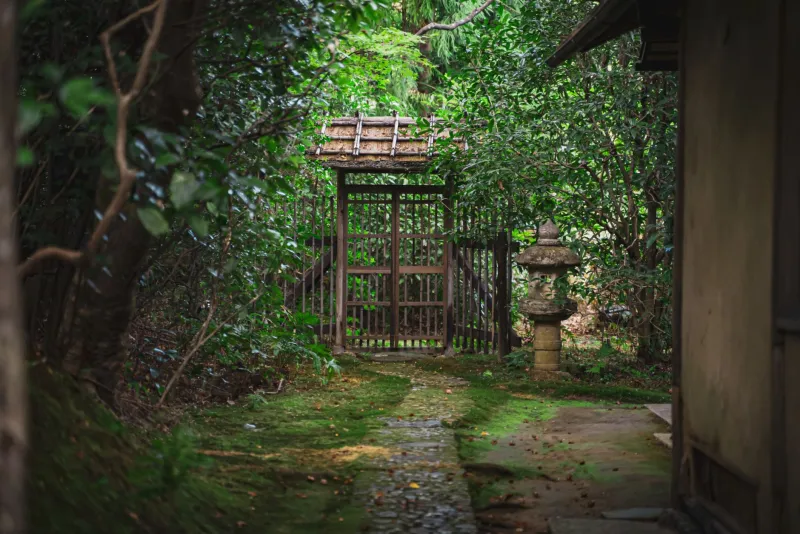
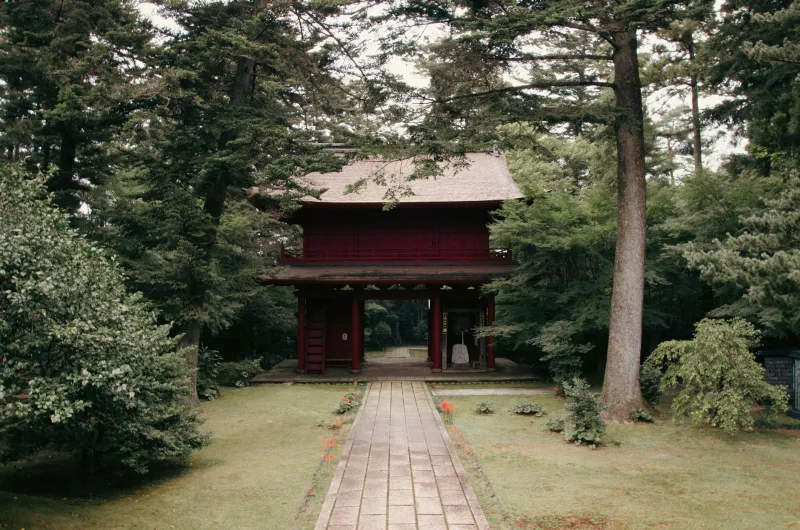
There is an old teaching embedded in the architecture of many Japanese sacred sites: the gate is not merely an entrance. It is also, and perhaps more importantly, a boundary. It marks the threshold between what is admitted and what is kept outside. The gate does not apologize for its selectivity. It simply stands.
The priests who say no to the market are practicing a form of this same architectural wisdom. They are maintaining the gate. They are insisting, in the face of considerable pressure, that not everything belongs inside — and that the value of what does belong there depends entirely on that insistence.
In an age that has nearly forgotten how to refuse anything, this is not a minor lesson. It may, in fact, be the most important one a sacred site has left to teach.